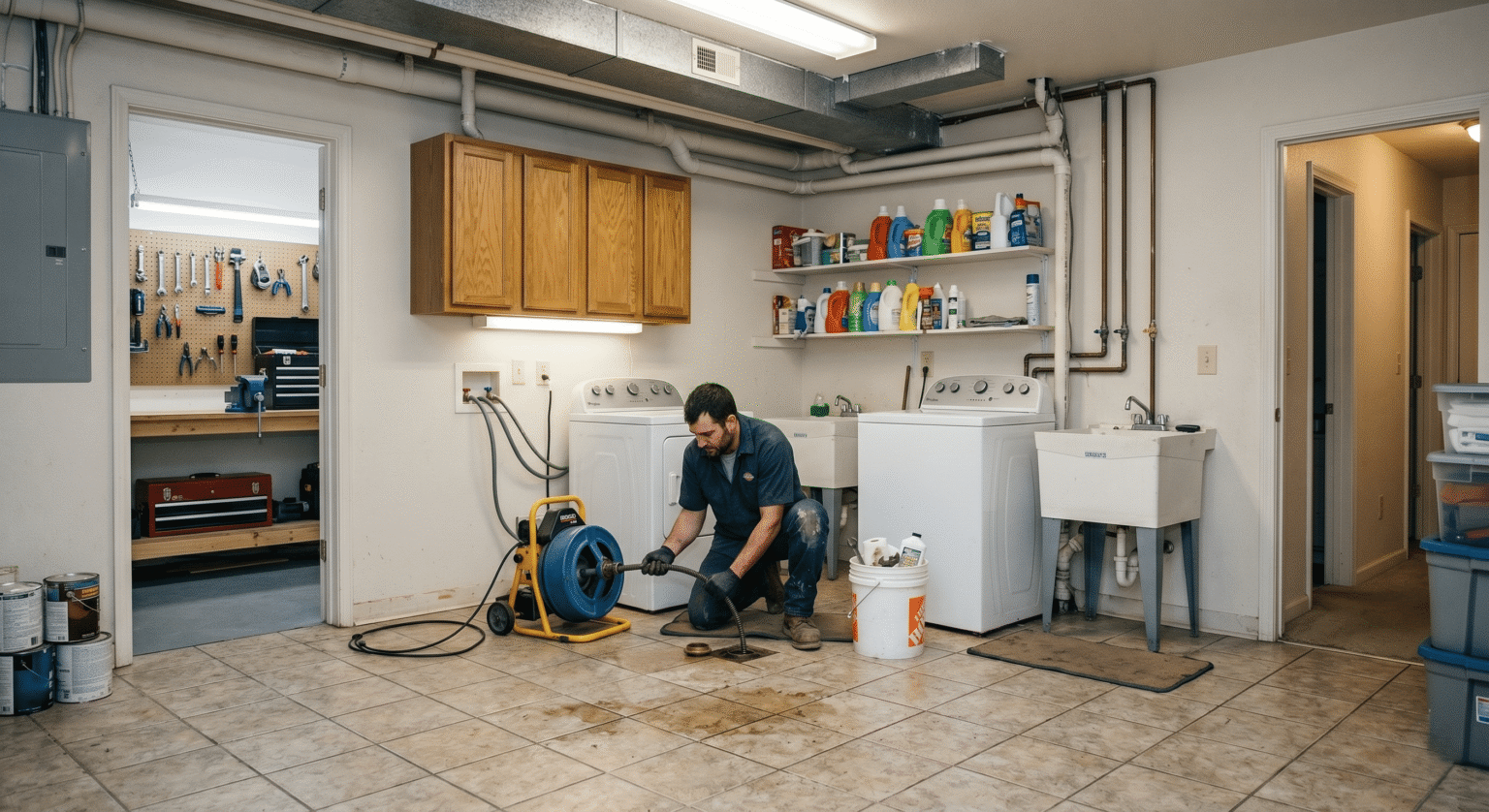
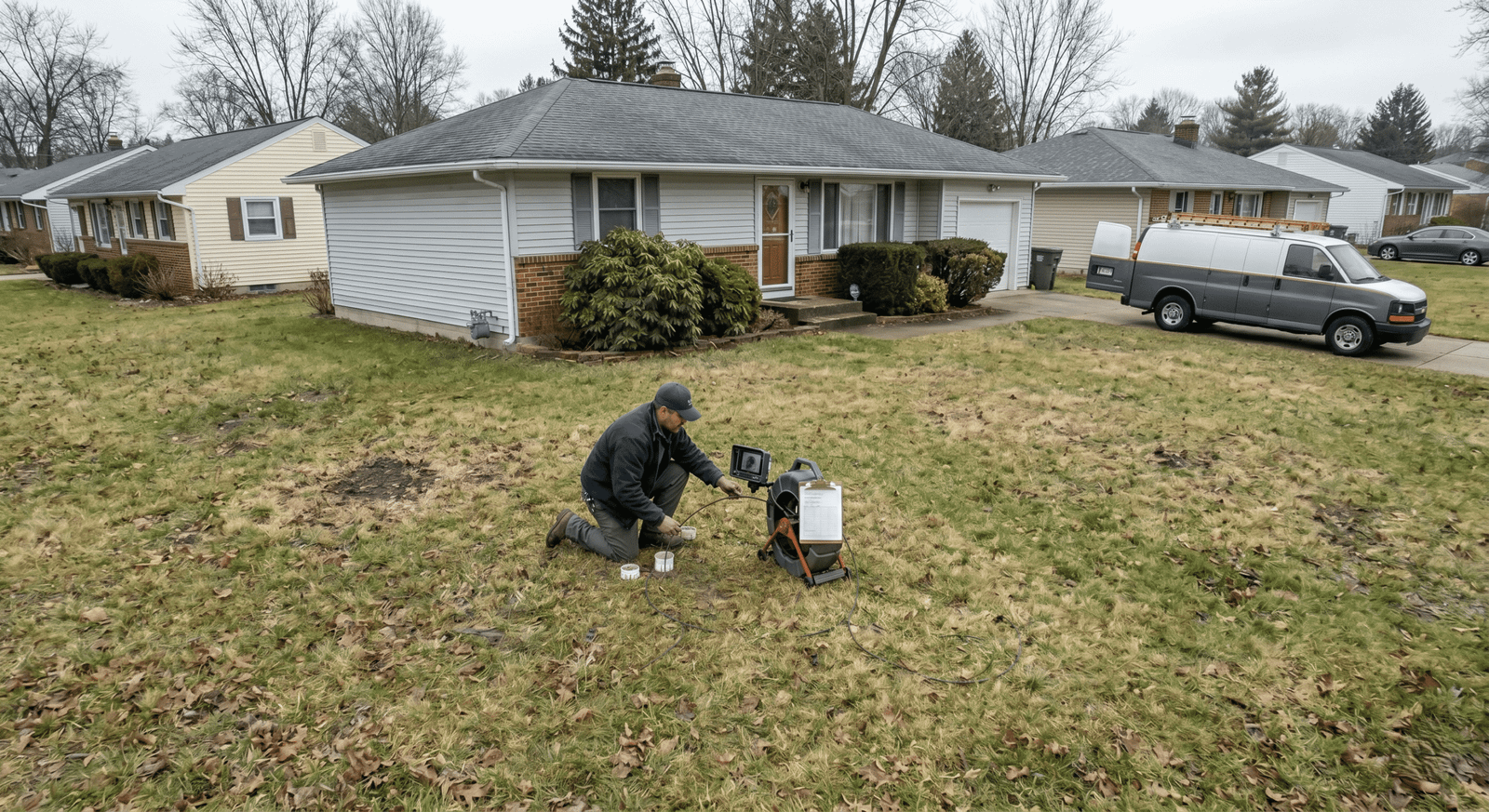
A drain snake punches a hole through a clog. Hydro jetting scours the pipe wall clean. Most clogs only need the snake; grease, scale and recurring roots need jetting, and old or cracked pipe needs a camera before either one.
Use a drain snake (a cable) for a plug: hair, wipes, a toy, a single clog. Use hydro jetting when the pipe is coated rather than blocked, as with kitchen grease, hard water scale or fine roots that keep coming back. On old cast iron or any line that may be cracked, a camera should go in first, because high pressure water can make a failing pipe worse.
Bulwark Plumbing handles cabling, hydro jetting and camera work on drain and sewer lines from our shop in Grapevine, covering Southlake, Colleyville and 52 cities across DFW, and shows you the footage before recommending anything.
A drain snake is a coiled steel cable with a cutting or auger head on the end, spun by hand or by a motor and fed down the line until it reaches the blockage and breaks through it. Plumbers usually call this cabling or rodding. The small hand augers sold at hardware stores are the same idea at a much smaller scale.
The head bores an opening roughly the size of the cutter. That is enough to get water moving, and for a clog made of one thing in one place, it is often enough to fix the problem outright. What it does not do, unlike hydro jetting, is clean the rest of the pipe. Grease left on the walls, scale on the inside of cast iron, and the stubs of roots at a joint all stay where they were.
Hydro jetting pushes water at very high pressure through a hose with a nozzle on the end. The nozzle has jets that point backward and to the sides, which both pull the hose forward and blast the full circumference of the pipe as it travels. The result is a pipe wall scrubbed back to the material rather than a tunnel through the middle of the buildup.
Different hydro jetting nozzles do different jobs. Some are built to cut through a plug at the front, some to scour, and some spin to cut roots. A plumber running a hydro jetting job picks the nozzle and pressure to match the pipe size, the pipe material and what is in it. That last part is why the camera matters so much, and we come back to it below.

Tell us which drains are slow and how often it happens. A licensed Bulwark plumber will tell you whether it sounds like a snake job, a hydro jetting job or a camera first. Phone advice costs nothing.
The short version is that a snake treats a blockage and hydro jetting treats the pipe. Here is how they compare on the things homeowners actually ask about.
| Drain snake (cable) | Hydro jetting | |
|---|---|---|
| What it removes | A path through the clog. Hair, wipes, paper, small objects, root masses. | Buildup on the whole pipe wall. Grease, soap scum, scale, sludge, fine roots, sand. |
| Best for | Single clogs, first visits, lines that are fully blocked. | Lines that are coated, kitchen and grease lines, repeat clogs on sound pipe. |
| Limits | Leaves residue on the walls, so a coated line closes again sooner. | Needs somewhere for water to drain, needs access, and needs a pipe sound enough to take the pressure. |
| Risk on fragile pipe | Lower, though a cutter can chip brittle cast iron or snag a broken joint. | Higher. Pressure can widen cracks, break thin or scaled cast iron, or blow out a failing joint. |
| Camera needed? | After, on main lines or repeat clogs. | Before, on older pipe, and after, to confirm the result. |
Neither a snake nor hydro jetting is a repair. If the camera shows a broken section, an offset joint or a belly where the slab has moved, cleaning only buys time. That is true whether the line was snaked or jetted.
A drain snake is enough when the problem is a plug rather than a coating: one fixture, one clog, a line that was working fine until something went down it. A bathroom sink full of hair, a toilet with a wad of wipes, or a main line that stopped after a flushed object are all snake jobs.
It is also the usual first step when a line is completely stopped. Hydro jetting needs the water to drain away ahead of the nozzle, so a fully blocked main is normally cabled open first. Once water is moving, a camera shows whether the line is clean enough to leave or coated enough to need hydro jetting.
If the snake clears it and it stays clear for years, you have your answer. If it clears and closes again in a few weeks or months, the snake was treating a symptom.
Hydro jetting is the better choice when the inside of the pipe is the problem: grease that has narrowed a kitchen line, scale built up inside old cast iron, fine roots that keep growing back between cleanings, or a commercial kitchen line that sees heavy grease every day. In those cases a snake makes a hole and the rest of the buildup catches the next clog.
It depends on the condition of the pipe, and that is something only a camera can tell you. Cast iron that is still structurally sound can usually take hydro jetting with the right nozzle and pressure. Cast iron that is badly corroded, cracked, thin at the bottom or already missing sections can be damaged by hydro jetting, and the water can wash out soil around a break.
That matters in DFW, where cast iron drain was standard in houses built until about 1970 and much of it is now past its service life. Old cast iron often scales on the inside while the bottom of the pipe wears thin, so the buildup that makes hydro jetting tempting can be the only thing holding a weak section together. Clay sewer pipe of the same era has its own risks at the joints. Expansive Blackland Prairie clay also moves slabs and the lines under them, which adds cracks and offset joints to the list.
Honest answer, then: hydro jetting is not inherently unsafe for cast iron, and it is not automatically safe either. Anyone who will jet a 1960s line without looking at it first is guessing.
The camera goes in before cleaning to decide which tool is safe and useful, and after cleaning to show whether it worked and what caused the problem. Without it, both a snake and hydro jetting are done blind.
Our sewer camera inspection page covers what the footage can show in more detail, and why a sewer keeps backing up walks through the causes the camera tends to find.
For a single fixture, yes. A small hand auger is a reasonable tool for a slow bathroom sink or tub, and plenty of homeowners clear their own hair clogs. Stop there if the clog does not come out easily.
The limits are real, though:
If more than one fixture is backing up, the problem is the main line. Stop running water and call (817) 677-9010, because the next shower or load of laundry will come up through the lowest drain in the house. Our 24/7 emergency plumbing line is answered around the clock.
We open the line, camera it, show you the cause, and then recommend cabling, hydro jetting or a repair based on what the pipe can take. The technician who comes out is a Bulwark employee working under Texas license 47173, never a subcontractor.
One thing to know when comparing quotes: drain cleaning, whether by snake or by hydro jetting, is the one service no honest plumber can warranty against refilling, because nothing stops a line from closing again while the cause is still in the pipe. Repairs carry our labor warranty. See drain cleaning for how a full visit runs, or browse more plumbing answers.
We cover Grapevine, Southlake, Colleyville and the rest of DFW. Book a window online in about a minute, or call (817) 677-9010 if a line is backing up now.
Not in every case. Hydro jetting cleans the whole pipe wall, so it is better for grease, scale and fine roots, but a snake is faster and perfectly adequate for a simple clog such as hair or a dropped object. The right choice depends on what the camera shows is inside the line.
There is no single schedule for a house. Most homes never need routine hydro jetting, while a restaurant grease line or a main with a known root problem may need it on a regular interval. The interval should come from how fast the line builds up again, which a camera inspection after cleaning can tell you.
It can, though the risk is lower than with hydro jetting. A cutting head run carelessly can chip brittle cast iron, catch on an offset joint, or get stuck in a broken section. Rental snakes in untrained hands are also known to scratch porcelain and kink inside toilet traps.
No. Hydro jetting cuts roots off at the pipe wall and flushes them out, but the roots are still alive on the other side of the joint and will grow back through the same gap. Ending a root problem means repairing or replacing the joint or section they are entering through.
It should not. The water travels down the drain the same way waste does, and the jetter is normally run from an outdoor cleanout or a roof vent rather than from a fixture inside. If a line is fully blocked, it is usually opened with a cable first so the jetting water has somewhere to go.
Some tool rental shops carry small electric jetters, but high pressure water can cut skin, and running one blind in an old line can push water out of a cracked pipe or damage weak sections. For a main line, the camera inspection that should come first is the part a homeowner cannot easily rent.
Sometimes. If the pipe wall is coated with grease or scale, the camera cannot see the pipe itself, so a cleaning first gives a clearer picture. If the line is open and reasonably clean, the camera can go in first and the inspection decides whether any jetting is needed at all.
Yes. Restaurants and other commercial kitchens get scheduled hydro jetting on grease lines, and we also serve retail, offices, churches, small industrial and multifamily properties. Work is scheduled around operating hours wherever the job allows.
Tell us what is happening and we come back with an arrival window. For anything actively leaking, call instead: the line is answered around the clock.
Pick an arrival window and have it confirmed while you are still on the page. For anything actively flooding, call instead: the line is answered 24 hours a day.