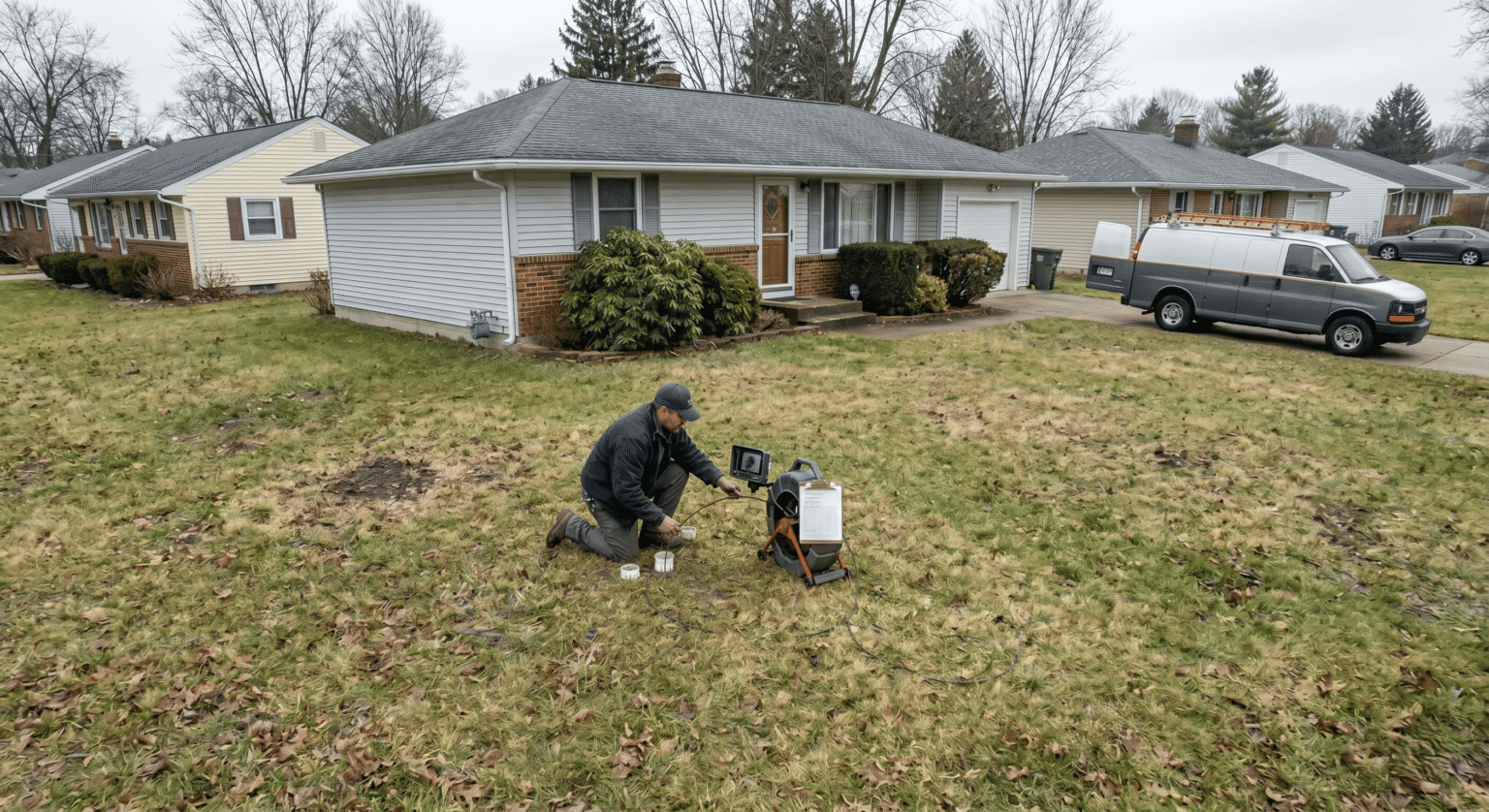
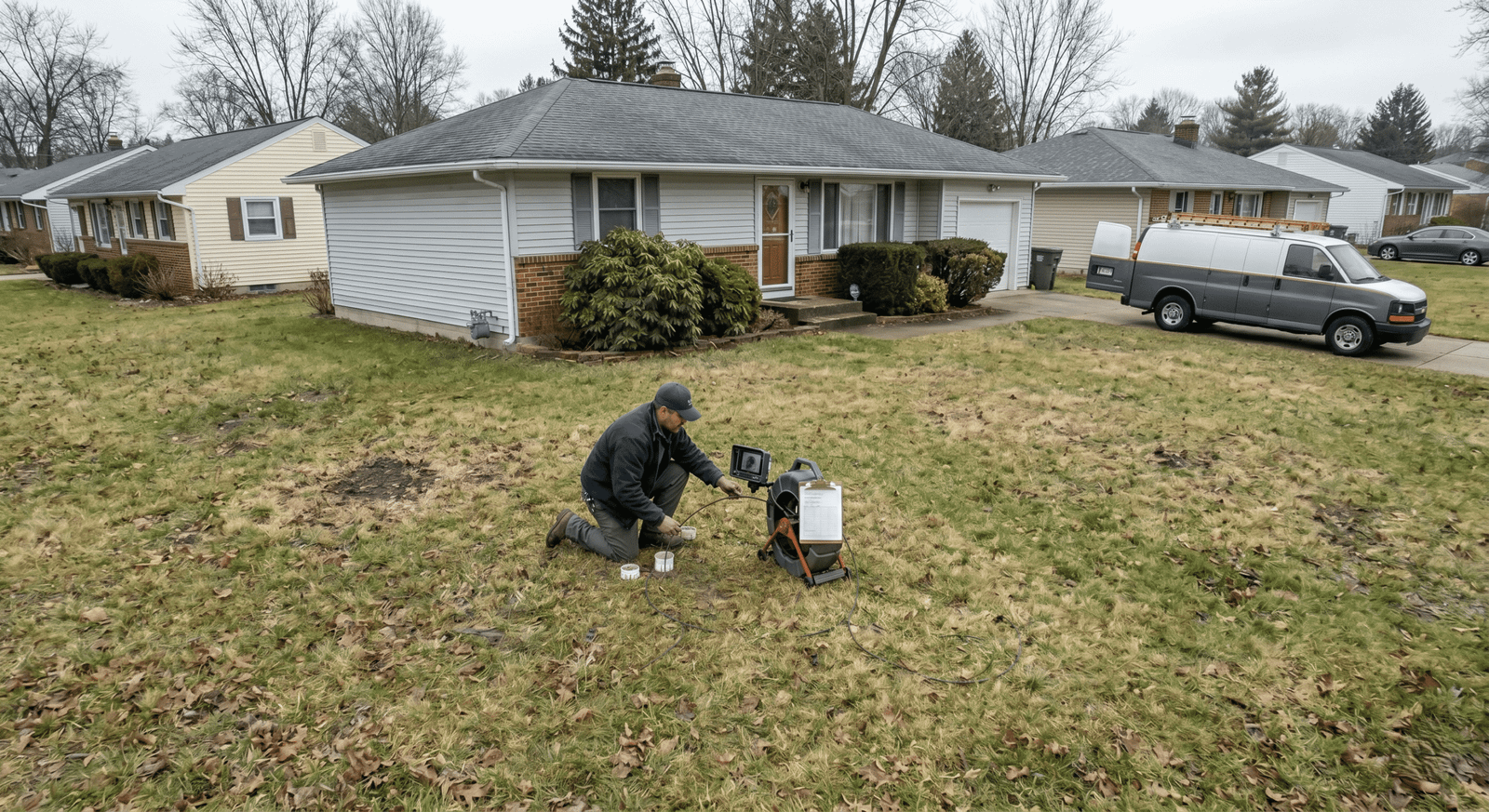
Bulwark Plumbing provides hydro jetting service for kitchen lines, scaled cast iron, root-filled sewers and commercial grease lines across Grapevine and DFW. We camera the line first, jet it at a pressure suited to the pipe, and show you the clean wall afterward.
A hydro jetting service cleans a drain or sewer line with water at high pressure, scouring grease, scale, sludge and fine roots off the full pipe wall instead of punching a hole through them. It is the right tool when a line is coated, not just blocked.
Bulwark Plumbing runs a camera before and after every hydro jetting service on a main or an older line, and gives you a written flat price before any work starts. We work from our shop at 720 Industrial Blvd in Grapevine across 52 cities in DFW, 24 hours a day.
You need a hydro jetting service when a line keeps closing because of what is stuck to its walls rather than what is stuck in its middle. If a kitchen line, a main or a commercial grease line has been cabled and closed again within weeks, a cable is treating the symptom.
If you are still deciding between a cable and a jet, our answer on hydro jetting vs. a drain snake compares the two side by side. This page covers how our hydro jetting service actually runs and what it costs you to find out.

A hydro jetting service removes material that coats the inside of the pipe: grease, hard water scale, soap sludge, silt and fine roots. The nozzle’s rear jets pull the hose up the line while its forward and side jets scour the full circumference, so the pipe comes back close to its original opening.
Cooking fat cools and hardens on the pipe wall, building up in layers that catch food waste. A cable passes through the middle and leaves most of it behind. Jetting takes it off the wall, which is why a hydro jetting service is the standard fix for a kitchen line that keeps closing.
Cast iron drain was standard in DFW until about 1970. It corrodes and scales from the inside, and hard water adds to it. On pipe that still has its full wall, a hydro jetting service can restore much of the opening and leave a smoother surface that sheds waste.
Clay sewer pipe of the same era takes roots at its joints. Jetting cuts the fine root mat out of the pipe and cleans the joint. It does not stop the roots coming back, which is covered in our answer on roots in a sewer line.
Book online and have the window confirmed on the spot. If sewage is backing up right now, call instead.
The camera before a hydro jetting service decides whether jetting is safe and useful; the camera after shows that it worked and what the buildup was hiding. Without both, the job is done blind.
Before, the footage shows the pipe material, its condition, where the buildup sits and what it is made of. After, it shows the clean wall, and often a crack, an offset joint, a belly or the joint the roots came in through. You watch the footage with the technician on the spot, and for anything under a driveway or the slab the location is recorded so a repair can be planned to a spot. Our sewer camera inspection page covers what the camera shows in more detail.
Every hydro jetting service follows the same order: diagnose, decide, jet, verify, then price anything the camera found. Nothing is jetted until you have approved a written price.
Commercial kitchens are where a hydro jetting service earns its keep, because grease coats the line every day of service. We jet grease lines for restaurants, retail, offices, churches, small industrial buildings and multifamily properties, and we schedule the work around your operating hours wherever the job allows.
A camera run after the first jetting shows how fast the line is coating, and that sets a realistic interval. Most kitchens do better on a fixed hydro jetting service schedule than waiting for a backup during a dinner rush. The same 24/7 line covers an overnight backup, and we also handle backflow testing and water heater banks. Property managers and owners can read more on our commercial plumbing and property management plumbing pages.
A hydro jetting service is safe on pipe that is structurally sound and is not safe on pipe that is cracked, rotted through along the bottom, separated at the joints or partly collapsed. High pressure water can push through a weak wall, wash soil into the line, or widen a break.
That is the whole reason for the camera first. If the footage shows sound pipe with buildup, we jet it. If it shows a failing section, we show you and price the repair instead of a cleaning that could finish the pipe off. The longer answer is in is hydro jetting safe for cast iron.
The cost of a hydro jetting service depends on the length of the line, the access, how heavy the buildup is and whether the line has to be opened first, so we do not publish a figure that would not hold. Here is what you can rely on:
No, and we say so up front. Drain cleaning, jetting included, is the one service we do not warranty, because no plumber can honestly promise a line will not fill again while its cause is still in the pipe.
What we do is show you the cause. Repairs carry our one year labor warranty, and sewer line replacement carries three years, permitted and inspected where the city requires it. See sewer line repair for that side of the job.
A Bulwark employee working under TSBPE license 47173, Responsible Master Plumber Jared J. Allen. We do not subcontract, and your call is never sold as a lead. Our hydro jetting service covers Grapevine, Southlake, Colleyville, Keller, Coppell and the rest of our 52 city DFW service area. For a simple clog, start with drain cleaning; more homeowner questions are in plumbing answers.
When the pipe is coated rather than plugged. Grease in a kitchen line, scale in old cast iron, or a mat of fine roots will close again after a cable punches a hole through it. A hydro jetting service scours the full pipe wall instead. For a single clog of hair, paper or a dropped object, a cable is still the right tool.
On any main line, any older home, and any line that has closed before, yes. The camera shows whether the pipe is sound enough to take high pressure water and what is actually in it. A second look after the jetting shows the clean pipe wall and anything the buildup was hiding.
It depends on the length of the line, how heavy the buildup is, and how easy the access is. A residential main with a usable cleanout is usually a single visit. Commercial grease lines with heavy buildup take longer, and we schedule them around your operating hours wherever the job allows.
No. Jetting cuts roots out and cleans the joint, but the roots are still outside the pipe and will grow back through the same opening. It buys time. Repairing the joint is what ends root intrusion, and the camera after jetting shows which joint that is.
It is safe for pipe that is structurally sound and it is one of the better ways to clean scale out of it. It is not safe for pipe that is cracked, rotted through or partly collapsed, because pressure can widen a break. That is why we camera older lines first and tell you if jetting is the wrong tool.
Drain cleaning, including jetting, is the one service we do not warranty, because no plumber can honestly promise a line will not fill again while its cause is still in the pipe. Repairs carry our one year labor warranty, and sewer line replacement carries three years.
Yes. We jet grease lines for restaurants, retail, offices, churches, small industrial buildings and multifamily properties. A camera run after the first jetting shows how fast the line is coating, which sets a realistic cleaning interval. We also handle backflow testing and water heater banks.
It depends on the line, the access and how heavy the buildup is, so we do not publish a figure that would not hold. The diagnostic fee is quoted on the phone before anyone is sent and credited in full if you go ahead, and the jetting itself gets a written flat price you approve before work starts.
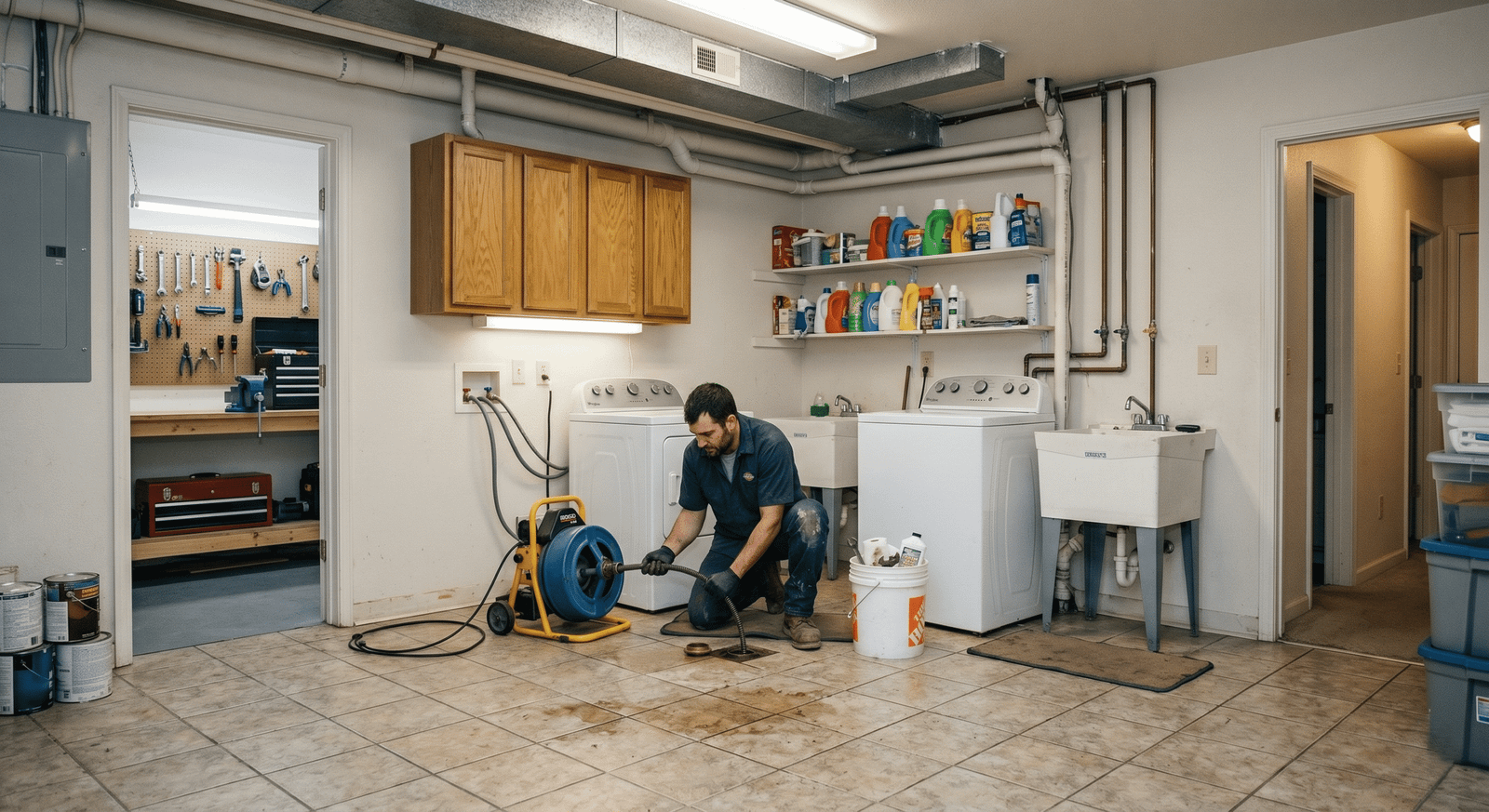
Tell us what is happening and we come back with an arrival window. For anything actively leaking, call instead: the line is answered around the clock.
Pick an arrival window and have it confirmed while you are still on the page. For anything actively flooding, call instead: the line is answered 24 hours a day.