If your sewer keeps backing up, cleaning opened the pipe but did not remove what is catching waste. Roots, a sagging belly, scaled cast iron or a broken joint will close the line again on a schedule until someone finds the defect on camera and repairs it.
TSBPE 4717324/7 Emergency LineUpfront Flat PricingGrapevine Shop, All DFW
The Short Answer
If your sewer keeps backing up, the line has a physical defect that catches waste: tree roots at a joint, a belly where the pipe has sagged, scale or cracks in old cast iron, grease, an offset joint, or a partly collapsed section. Cleaning restores flow but leaves the defect in place, so the backup returns.
When a sewer keeps backing up, Bulwark Plumbing clears the line, runs a camera through it, shows you the cause, and prices the repair in writing. We work from our shop in Grapevine across Southlake, Colleyville and the rest of DFW, 24 hours a day.
My Sewer Keeps Backing Up After It Was Cleaned. Why?
When a sewer keeps backing up after a professional cleaning, the cleaning worked, and the pipe is the
problem. A cable or jet removes the blockage. It does not straighten a sagging pipe, seal a cracked joint or
smooth a corroded wall, so the same spot catches paper and waste again within weeks or months.
If your sewer keeps backing up, the useful question is not “how do I clear it” but “what is catching it.” From inside the house every
answer looks the same: drains slow, toilets gurgle, then the lowest shower fills.
Seven Reasons A Sewer Keeps Backing Up
Most of the time a sewer keeps backing up for one of the seven reasons below, and six of them are in your
own line.
1. Tree roots at the joints
Roots are the most common reason a sewer keeps backing up on a regular schedule. Clay sewer pipe laid
before about 1970 has a joint every few feet, and roots find the water vapor escaping from those joints, grow
in through the smallest gap, and spread into a mat inside the pipe. Cutting them out restores flow. They grow
back from the same joint.
2. A belly from slab and soil movement
DFW sits on Blackland Prairie clay, which swells when wet and shrinks when dry. Over years that movement
can let a section of sewer line sag, forming a low spot, called a belly, where water and solids sit instead of
draining. Each flush leaves a little more behind until the belly fills, which is why a sewer keeps backing up at the
same low spot.
3. Cast iron scale and cracks
Cast iron drain pipe was standard in DFW homes until about 1970 and is now past its expected service life.
It corrodes from the inside, building rough scale that narrows the pipe and snags everything, and it cracks,
especially along the bottom where waste runs. If an older home’s sewer keeps backing up and the cable comes
back with rust flakes, this is the usual suspect.
4. Grease
Cooking fat goes down warm and hardens on the pipe wall as it cools, building up in layers that a cable
only punches a hole through. If the sewer keeps backing up and the trouble starts at the kitchen sink, grease is the likely
cause.
5. Offset or separated joints
When soil moves, two sections of pipe can shift out of line with each other. The lip that forms at the
offset catches waste, so the sewer keeps backing up at that joint, and a gap at the joint lets in soil and roots.
6. Partial collapse
Old clay, cast iron and some early plastic lines can crush or break under soil load. A partly collapsed
section leaves only a fraction of the pipe open, and the sewer keeps backing up no matter how often it is
cleaned.
7. The city main, not your line
Sometimes the blockage is in the public sewer main your line drains into. That is less common than a
private line problem, but it has a tell: your sewer keeps backing up at the same time as the neighbors’ on the same street.
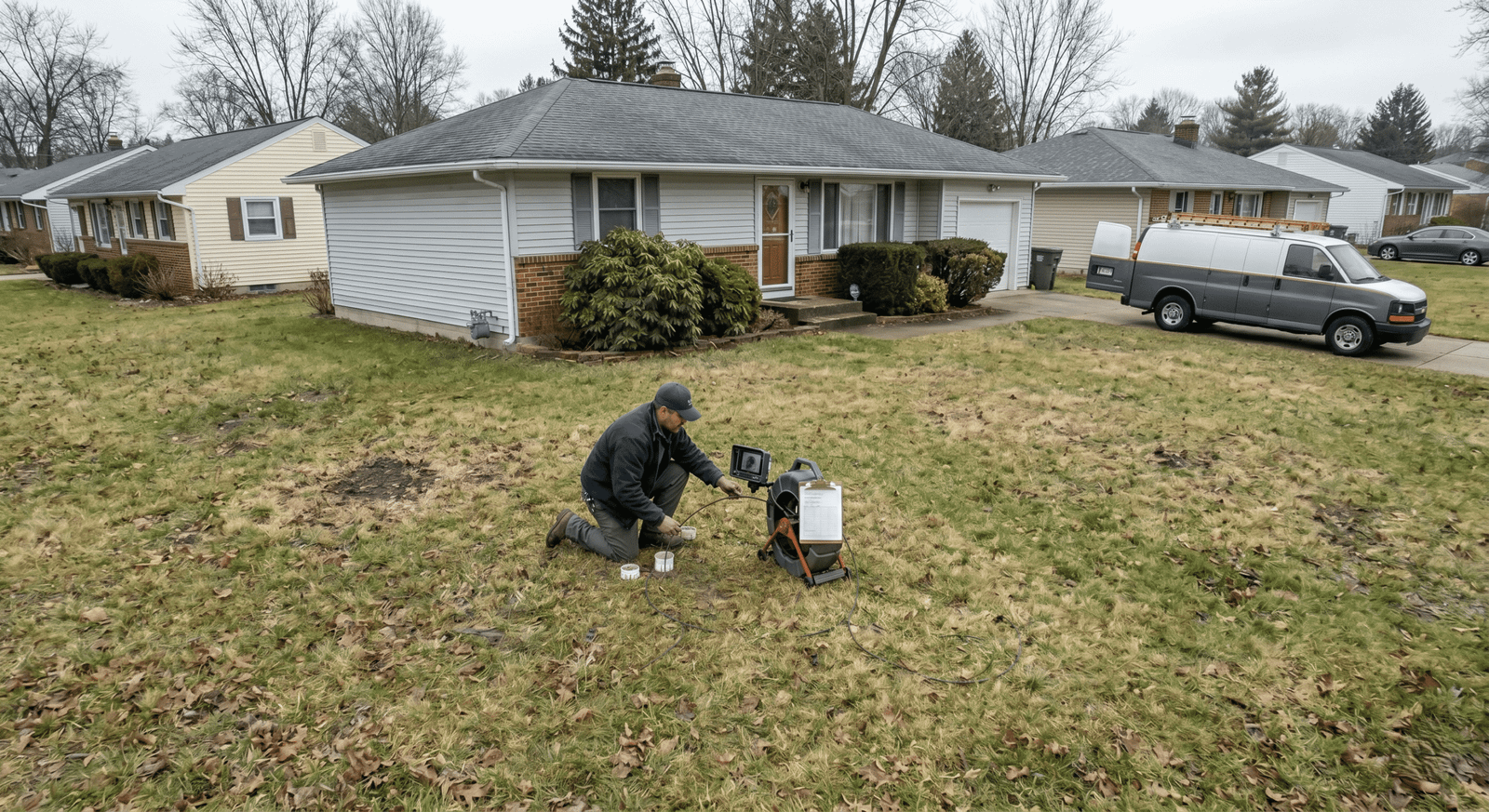
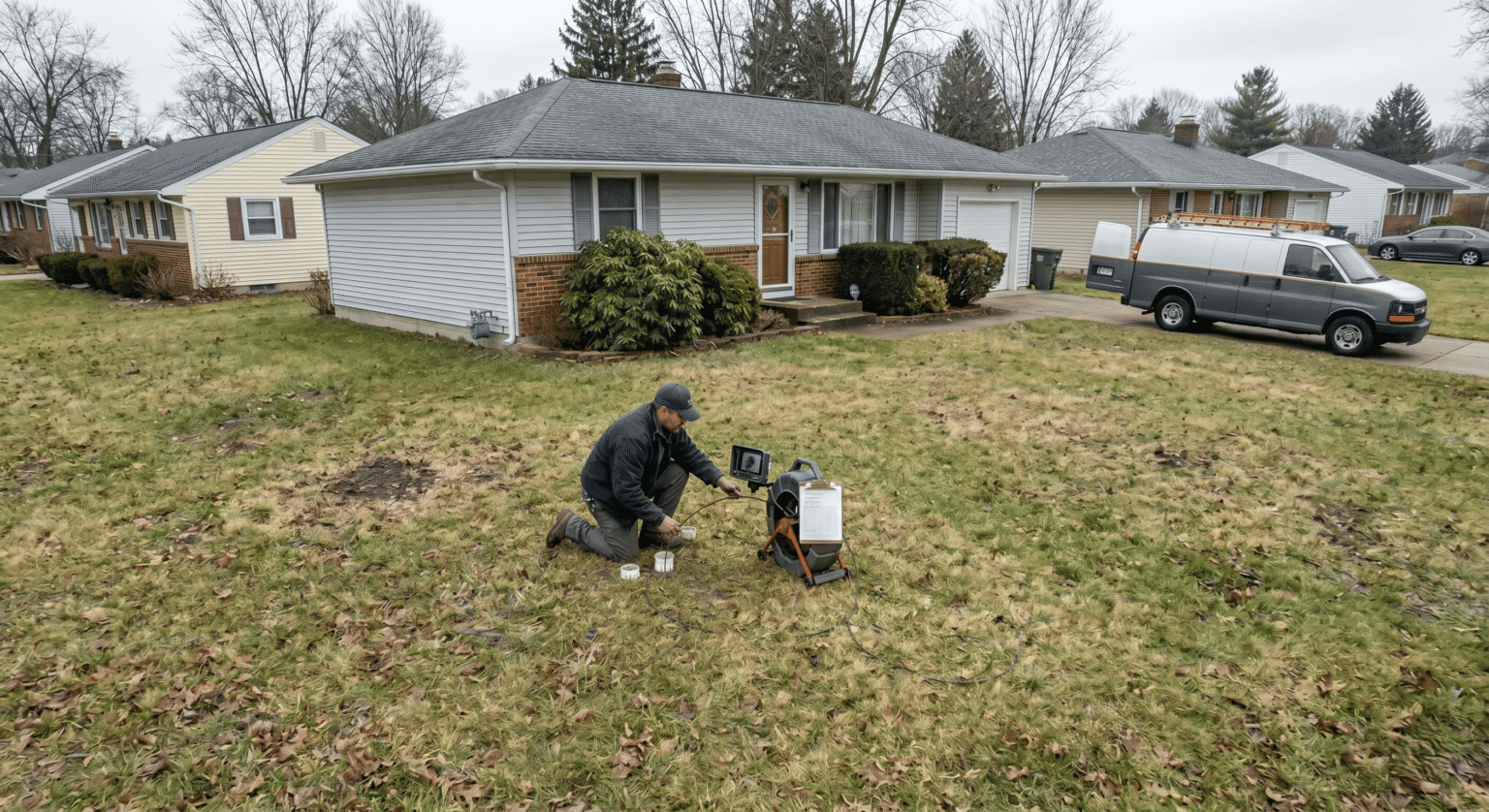
Bulwark PlumbingFinding why a sewer keeps backing up starts with locating the line
Bulwark Plumbing, Grapevine & DFW
Sewer Keeps Backing Up?
If your sewer keeps backing up and sewage is coming in, stop using water and call. Otherwise, book a window online and have it confirmed on the spot.
You can narrow it down from the pattern of the backups, but only a camera confirms it. If your sewer keeps
backing up, note when it happens, which fixtures go first, and how long a cleaning lasts. Those three details
point strongly toward one cause.
What you notice
Most likely cause
Why
Backups every few months, roots pulled out on the cable
Root intrusion
Roots regrow from the same joint at a steady rate.
Slow drains that never quite clear, worse after heavy use
Belly or offset joint
Water and solids settle in the low spot or catch on the lip.
Backups start at the kitchen sink
Grease
Fat builds on the kitchen branch and the main below it.
House built before about 1970, rust flakes or scale on the cable
Cast iron scale or cracks
The pipe wall itself is failing.
Cable stops at the same distance every time, or comes back with soil
Break or partial collapse
The pipe is no longer a full round opening.
Neighbors backing up at the same time
City main
The shared public line is blocked, not your lateral.
Sewer smell in the yard or a soggy, green strip of lawn
Crack or open joint
Sewage is leaking into the soil along the line.
Each time your sewer keeps backing up, ask what came back on the cable. Roots, grease, rust and soil each look different, and that alone often
tells you what you are dealing with.
What Should I Do Right Now If My Sewer Keeps Backing Up?
Stop using water everywhere in the house, then call a plumber. Every flush, shower, dishwasher cycle and
laundry load has nowhere to go but out of the lowest drain, so the single most effective thing you can do is
turn nothing on.
Stop all water useTell everyone in the house. Turn off the dishwasher and washing machine if they are mid cycle, and check that an ice maker or irrigation system is not draining into the line.
Keep people and pets away from the waterSewage carries bacteria. Do not wade through it barefoot, and keep children out of the affected room.
Watch for electrical hazardsIf backed up water is near outlets, cords or appliances, do not touch them while standing in water. Turn off a breaker only from a dry floor.
Ask the neighborsIf houses on your street are backing up too, call your city’s public works or utility line, because the blockage may be in the public main.
Call a plumberCall (817) 677-9010. Tell us which fixtures are affected, in what order, and whether the sewer keeps backing up after past cleanings. That tells the technician where to start.
If The Sewer Keeps Backing Up, Why Doesn’t Cleaning Fix It?
Because drain cleaning removes the blockage, not the defect that caused it. A cable cuts a path through
roots, and a jet scours grease and scale off the wall, but neither one can lift a sagging pipe, close a gap at
a joint or replace a collapsed section.
That is why we do not warranty that a cleaned line will stay clear, and why no plumber honestly can. What
we can do is show you why it closed. If your sewer keeps backing up and nobody has looked inside the line, the
next cleaning is buying time, not solving anything. Read more about the cleaning step itself on our
drain cleaning page, and about when jetting beats cabling in
hydro jetting vs. a drain snake.
What Does A Sewer Camera Inspection Show?
A sewer camera inspection shows exactly why a sewer keeps backing up, from your cleanout to the city
connection, with the distance to every defect. You see roots, bellies holding water, offset joints, cracks, scale and collapsed
sections directly, rather than guessing from symptoms.
Bulwark Plumbing runs the camera after the line is open, records the footage, and shows it to you on the
spot. The recording also locates the problem, so if the sewer keeps backing up because of one section, you know where it is and
roughly how deep, which keeps any digging to the spot that needs it. Where a spot repair and a full line
replacement are both legitimate options, you get both prices in writing. Sewer line replacements are
permitted and inspected where the city requires it. Details are on our
sewer camera inspection page.
Ask for the footage. If your sewer keeps backing up and someone recommends replacing the line, that recommendation should come with video of the defect and its location. If it does not, ask for it before you agree to anything, from us or anyone else.
Who Is Responsible For Which Part Of The Sewer Line?
In most cases the homeowner owns and maintains the sewer lateral, the pipe that runs from the house to the
city main, and the city maintains the public main. Where exactly that responsibility changes hands varies by
city. Some cities draw the line at the property line, some at the cleanout, some at the connection to the main
itself.
If your sewer keeps backing up and the problem looks close to the street, check first. Ask your city’s public works or utility department where its
responsibility ends before any repair there. If the camera shows the problem is in the public main or at the city’s connection,
that is useful evidence to give them, and your plumber should tell you so rather than quoting a repair on pipe
that is not yours.
Why A Sewer Keeps Backing Up So Often In Older DFW Neighborhoods
Because the two materials that fail most often here, clay sewer pipe and cast iron drain, were standard
until about 1970, and the soil underneath them moves. In established neighborhoods from that era across
Grapevine and the rest of DFW, when a sewer keeps backing up it is often an aging lateral meeting
mature trees and expansive clay. Newer homes are not immune: slab movement can belly a plastic line too.
When Is A Sewer Backup An Emergency?
A sewer backup is an emergency when sewage is coming into the house, or when you cannot stop using water.
That includes a backup spreading toward electrical equipment, a home with someone ill or very young, and a
business that cannot close its restrooms. If the sewer keeps backing up every time anyone runs water, treat
it as urgent.
If you can stop all water use and nothing is overflowing, a plumber can often tell you on the phone
whether it can wait until morning, and that advice costs nothing. Our 24/7
emergency line is answered around the clock. The 60 minute arrival is a target in our core area, not a
guarantee, and the dispatcher gives you an actual window on the call along with any after hours rate.
What Bulwark Plumbing Does When A Sewer Keeps Backing Up
We diagnose before we price. A Bulwark technician, our own employee working under Texas license TSBPE
47173, clears the line, runs a camera through it, and shows you why the sewer keeps backing up. The diagnostic fee is
quoted on the phone before anyone is sent and credited in full if you go ahead. You then get a written flat
price for the fix, and the invoice matches it.
If your sewer keeps backing up in Grapevine, Southlake, Colleyville or anywhere in the DFW area we cover,
call (817) 677-9010 or book online. Nothing overflowing
right now? Booking takes about a minute and confirms the window on the spot. For other common questions,
browse our plumbing answers.
When Your Sewer Keeps Backing Up: Questions
My sewer keeps backing up every few months. How often should a line need cleaning?
A sound sewer line should not need routine cleaning at all. If yours needs it every few months, the pipe has a defect that is catching waste, and a camera inspection will show what it is. Scheduled cleaning can hold roots back, but if a sewer keeps backing up between cleanings, the joint needs repair.
Can I use root killer or a store bought drain cleaner on my main line?
Chemical drain openers rarely reach a main line blockage in useful strength and can harm older pipe and anyone who later works on the line. Root treatment products can slow regrowth after a mechanical cleaning but do nothing about the open joint that lets roots in. If your sewer keeps backing up, ask your plumber before pouring anything into the line.
Why does my basement or lowest shower drain fill with sewage?
When a sewer keeps backing up, water leaves the system through the lowest opening it can reach. In most DFW slab homes that is a shower, tub or the downstairs toilet. The fixture itself is fine; it is simply where the backed up water finds its way out.
Will homeowners insurance pay if my sewer keeps backing up?
It depends on the policy. Many standard policies exclude sewer and drain backup unless a specific endorsement was added, and the pipe repair itself is often treated differently from the water damage inside the house. Read your declarations page or call your agent before assuming either way. If your sewer keeps backing up, keep your invoices and any camera footage in case you file a claim.
Does a sewer cleanout outside mean I can clear it myself?
When a sewer keeps backing up, opening a cleanout on the line can release sewage under pressure, and rental cable machines can get stuck in damaged pipe. If water is standing in the cleanout, the blockage is downstream of it, which is useful to tell the plumber.
Is it an emergency if my sewer keeps backing up at night or on a weekend?
Yes if sewage is coming into the house and you cannot stop using water, because it is a health hazard and it gets worse with every use. If you can stop all water use and nothing is overflowing, a plumber can often tell you on the phone whether it can wait until morning.
Do I need a new sewer line if my sewer keeps backing up?
Not automatically. If your sewer keeps backing up, the camera decides it: one root-filled joint or a short belly may take a spot repair, while cracks or collapse along the length of the line may call for replacement. Where both are legitimate options, you get both prices in writing.
My sewer keeps backing up mostly after heavy rain. Why?
Heavy rain can push groundwater into a sewer through cracks and open joints, and a public main can run full during a storm. If a sewer keeps backing up mainly after rain, a camera inspection shows whether your own line has open joints, and the neighbors' experience tells you whether the main is involved.
If your sewer keeps backing up, tell us which fixtures go first and how long cleanings have lasted. For sewage coming into the house, call instead: the line is answered around the clock.
Sewer keeps backing up but nothing is overflowing right now? Pick an arrival window and have it confirmed on the page. If sewage is coming in, call instead: the line is answered 24 hours a day.