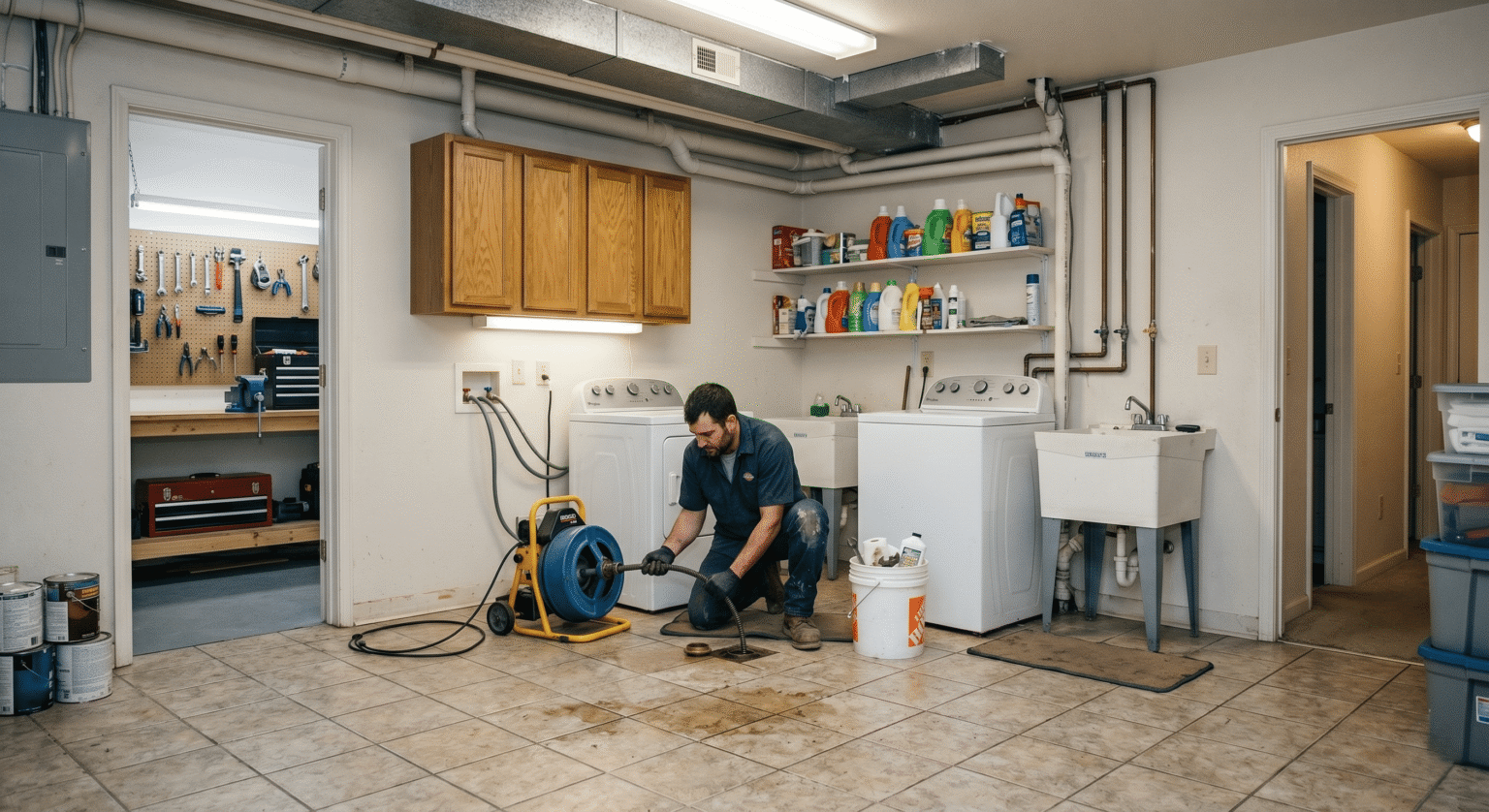
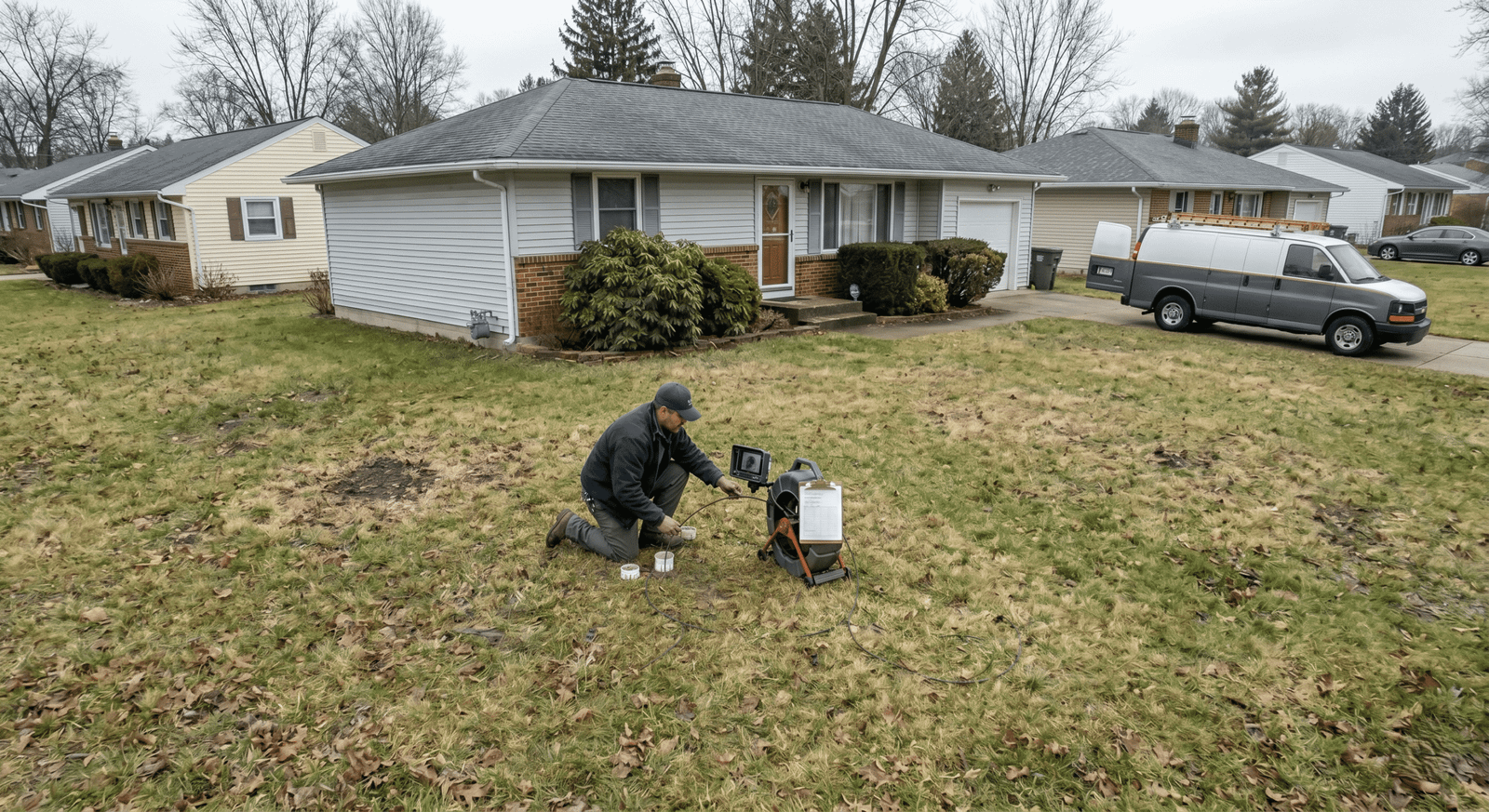
Bulwark Plumbing provides drain cleaning for blocked kitchen lines, slow tubs and backed up main sewers across Grapevine and the DFW metroplex, then cameras the line to show you why it closed. Licensed under TSBPE 47173, our own technicians, and a written price before any work starts.
Drain cleaning restores flow. Finding out why the drain closed is what stops it closing again. Bulwark Plumbing clears the line by cable or hydro jetting, runs a camera through it, shows you the cause on the screen, and only then prices the permanent fix.
We provide drain cleaning in Grapevine, Southlake, Colleyville and 52 cities across DFW from our shop at 720 Industrial Blvd in Grapevine, 24 hours a day.
Most drain cleaning visits end the moment water starts moving again. That is the step where we are only halfway done. A line that clogged once for a reason will clog again for the same reason, so every main line drain cleaning call follows the same five steps, in this order.

Because the reason it clogged is still in the pipe. Drain cleaning removes what is blocking the line today. It does nothing about what caught it. In North Texas that cause is usually one of four things, and each one looks the same from inside the house: a drain that runs slow, then stops.
Only a camera tells you which one you have. That is why repeat drain cleaning on the same line, without anyone looking inside it, is the most expensive way to own a house.
If more than one fixture is backing up, stop running water and call. Otherwise, book a drain cleaning window online and have it confirmed on the spot.
A gurgling toilet means air is being pulled through its trap because water cannot move freely down the drain it shares with the washer. The washing machine dumps a large volume fast. If the line downstream is partly blocked, that water pushes and pulls air through the nearest fixtures on its way past.
Most of the time the cause is a partial blockage in the branch or the main sewer line, which drain cleaning clears. Less often it is a blocked plumbing vent on the roof. Either way, a gurgle that starts appearing with laundry loads is an early warning, and drain cleaning at this stage is much cheaper than dealing with it after the main closes completely.
When two or more fixtures back up together, the blockage is almost always in the main sewer line, the one pipe every drain in the house empties into. Water then comes out of the lowest opening it can find, usually a shower, a tub or a floor drain. That calls for main line drain cleaning through the outside cleanout, not a plunger on the fixture.
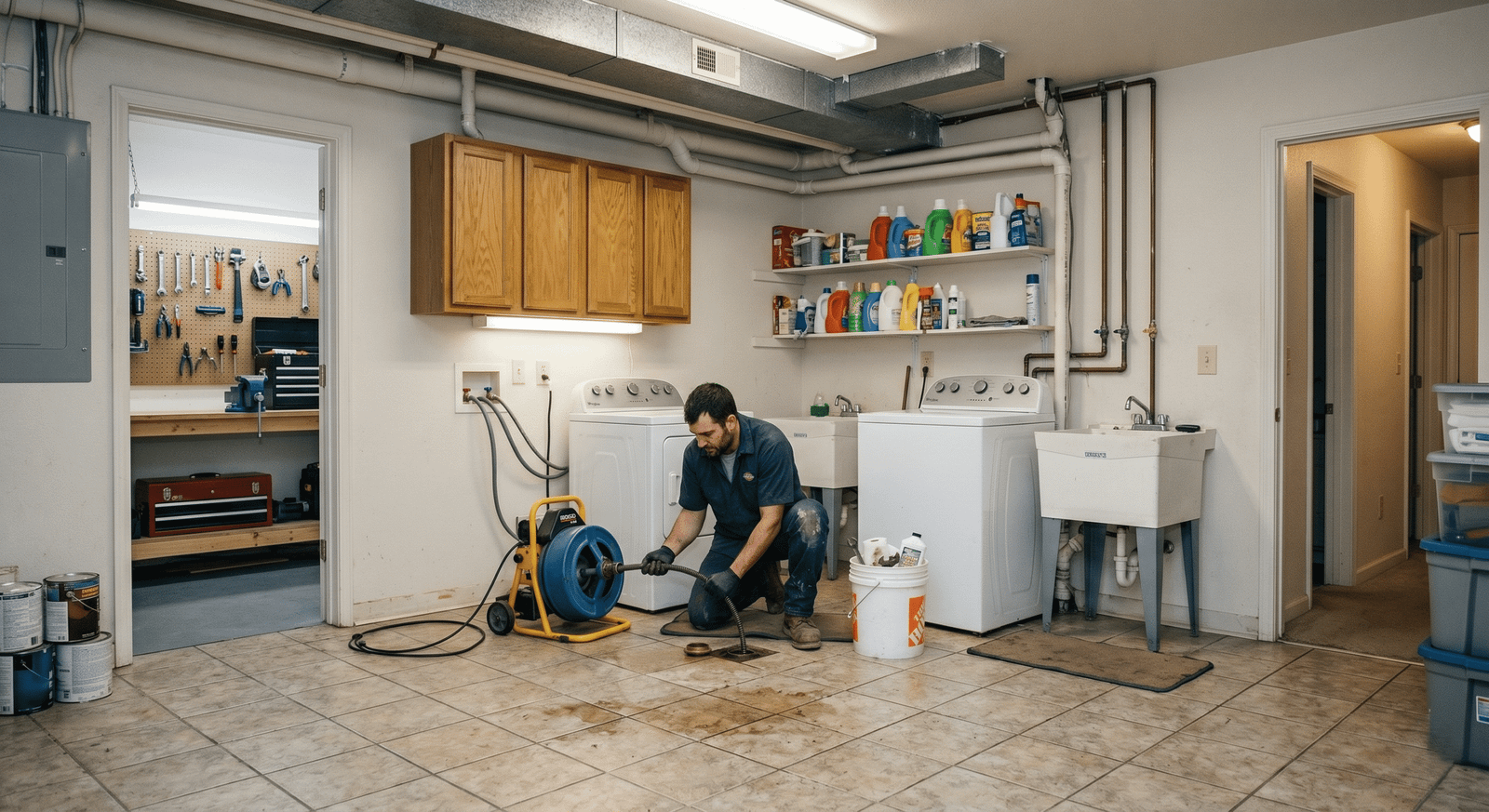
Cabling, the most common form of drain cleaning, also called snaking or rodding, feeds a spinning steel cable with a cutting head through the line to punch an opening through the blockage. It is fast, it works on most clogs, and it is the right first step for almost every drain cleaning call.
Hydro jetting sends water at high pressure through a nozzle that sprays backward and sideways, scouring the whole inside of the pipe as it moves. Where cabling makes a hole through grease or roots, jetting removes them from the pipe wall. That makes it the better drain cleaning method when the line is coated rather than simply blocked.
| Situation | Usual first step | Why |
|---|---|---|
| Single fixture clog (hair, soap, a foreign object) | Cable | Fast, and the blockage is a plug, not a coating. |
| Kitchen line that keeps closing with grease | Hydro jet | Grease lines the pipe wall. A cable only punches through it. |
| Main line with recurring root intrusion | Cable, then camera | Cut the roots, then find the joint they are coming through. |
| Heavily scaled line, sound pipe | Hydro jet | Restores the full diameter of the pipe. |
| Cracked or badly deteriorated pipe | Camera before jetting | High pressure water is the wrong tool on a pipe that is already failing. |
For the longer comparison, read hydro jetting vs. a drain snake. For line inspection on its own, see sewer camera inspection and hydro jetting.
On a main line, or on any drain that has clogged before, yes. A clog that came from something flushed is a one time event, and drain cleaning alone ends it. A clog that came from roots, a belly or a broken section is going to happen again, and a camera is the only way to tell those apart without digging.
The camera also records where the problem is and how deep, which matters if a repair is needed: it turns “somewhere under the yard” into a location you can point to. Bulwark Plumbing cameras the line after drain cleaning on main line calls and shows you the footage before recommending anything.
Yes, and they are the most common reason drain cleaning on the same main has to be repeated. Roots are drawn to the water vapor escaping from a sewer joint, grow into it through the smallest gap, and then expand inside the pipe into a net that catches paper and waste. Older clay and cast iron sewer lines in established DFW neighborhoods are especially prone to it.
The giveaway is a schedule. If your main backs up every few months, and it clears every time, roots are the most likely cause. Drain cleaning cuts them and restores flow for a while. Repairing the joint they are coming through is what ends it. Our guide on why a sewer keeps backing up covers the other recurring causes.
A single slow drain usually does not, and routine drain cleaning is all it needs. Hair and soap in a bathroom sink, or grease in a kitchen line, are local clogs, and ordinary drain cleaning fixes them. The signs that point to the main sewer line instead are:
Any of those deserves a camera along with the drain cleaning, because main line damage gets more expensive the longer it runs.
The honest answer is that it depends on which line is blocked, how we can get to it, and whether it needs cabling, hydro jetting or a camera inspection, which is why we do not publish a number that would not hold. Here is what you can rely on when you book drain cleaning with us:
One thing worth knowing when you compare quotes: drain cleaning is the one service where no plumber can honestly warranty that a line will not fill again, because nothing stops it while the cause is still there. That is exactly why we camera it afterwards.
We provide drain cleaning for houses, condos and multifamily buildings, and in restaurants, retail, offices and churches. Commercial kitchens get scheduled drain cleaning and grease line jetting, worked around your operating hours wherever the job allows. Every drain cleaning technician who comes out is a Bulwark employee working under Texas license 47173, not a subcontractor, and your call is never sold on to another company.
Because clearing a line restores flow but does not remove the reason it closed. Roots at a clay joint, a belly where the slab has moved, or scale inside old cast iron will catch debris again within weeks or months. A camera inspection after the line is open shows which one it is, and that is what tells you whether you need another drain cleaning or a repair.
A gurgle is air being pulled through the toilet's trap because water cannot move freely down the shared drain. It usually means a partial blockage in the branch line or main downstream of both fixtures, and less often a blocked vent on the roof. When it appears alongside slow tubs or a smell, treat it as an early warning that the main is closing.
When more than one fixture backs up, especially the lowest drains in the house such as a shower or a floor drain, the blockage is almost always in the main sewer line rather than in any one fixture. Stop running water, because every flush and load of laundry has nowhere to go but out of the lowest opening, and call for main line drain cleaning.
Cabling, or snaking, spins a cutting head through the line to punch an opening through the blockage. Hydro jetting sends water at high pressure through a rotating nozzle that scours the whole pipe wall, removing grease, scale and fine roots rather than just making a hole through them. Cabling is the right first step in drain cleaning for most clogs. Jetting is the better treatment when a line is coated, not just blocked.
On a main line or any drain that has clogged before, yes. A camera shows whether the line closed because of something someone put down it or because the pipe itself is failing, and those lead to very different decisions. Bulwark Plumbing cameras the line after drain cleaning and shows you the footage on the spot.
Yes, and in older DFW neighborhoods they are one of the most common causes. Roots find the joints in clay and older cast iron sewer lines, grow through them, and catch everything that passes. Drain cleaning cuts them out and restores flow, but they grow back from the same joint, which is why a recurring backup on a schedule usually means roots.
Not necessarily. A single slow sink or tub is usually a local clog of hair, soap or grease in that fixture's branch, and routine drain cleaning clears it. Slow drains throughout the house, gurgling, or sewer smell point toward the main line, and the main line is where damage such as roots, a belly or broken pipe shows up.
No. It is the one service we do not warranty, because no plumber can honestly promise a line will not fill again while the cause is still in the pipe. That is why drain cleaning at Bulwark ends with a camera and a written price for the repair that actually fixes it. Repairs carry our one year labor warranty.
It depends on which line is blocked, how it can be accessed, and whether it needs cabling, jetting or a camera inspection. Bulwark Plumbing quotes a diagnostic fee on the phone before anyone is sent, credits it in full if you go ahead, and gives you a written flat price before any work starts, so the invoice matches the quote.
Tell us what is happening and we come back with an arrival window. For anything actively leaking, call instead: the line is answered around the clock.
Pick an arrival window and have it confirmed while you are still on the page. For anything actively flooding, call instead: the line is answered 24 hours a day.