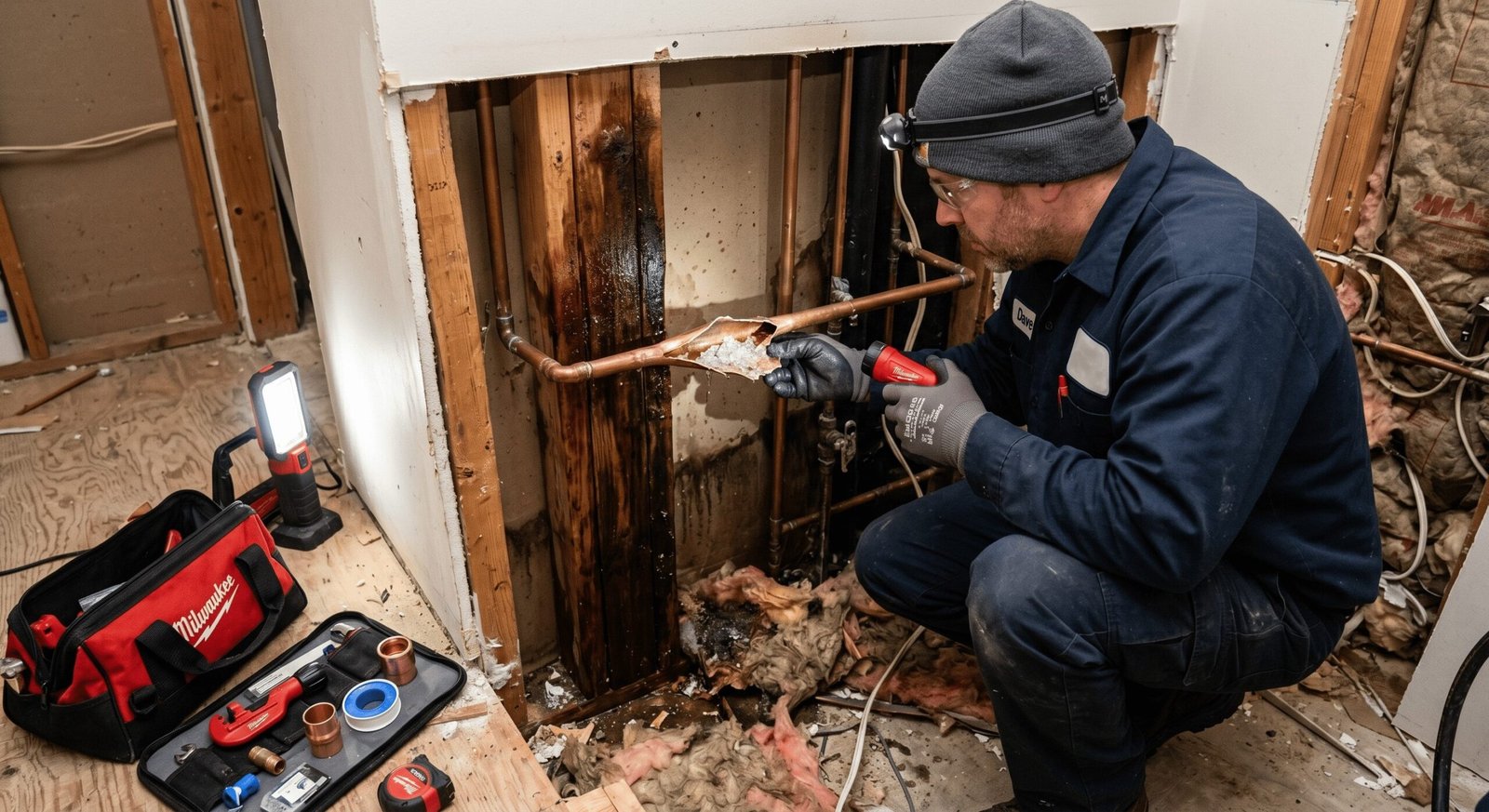
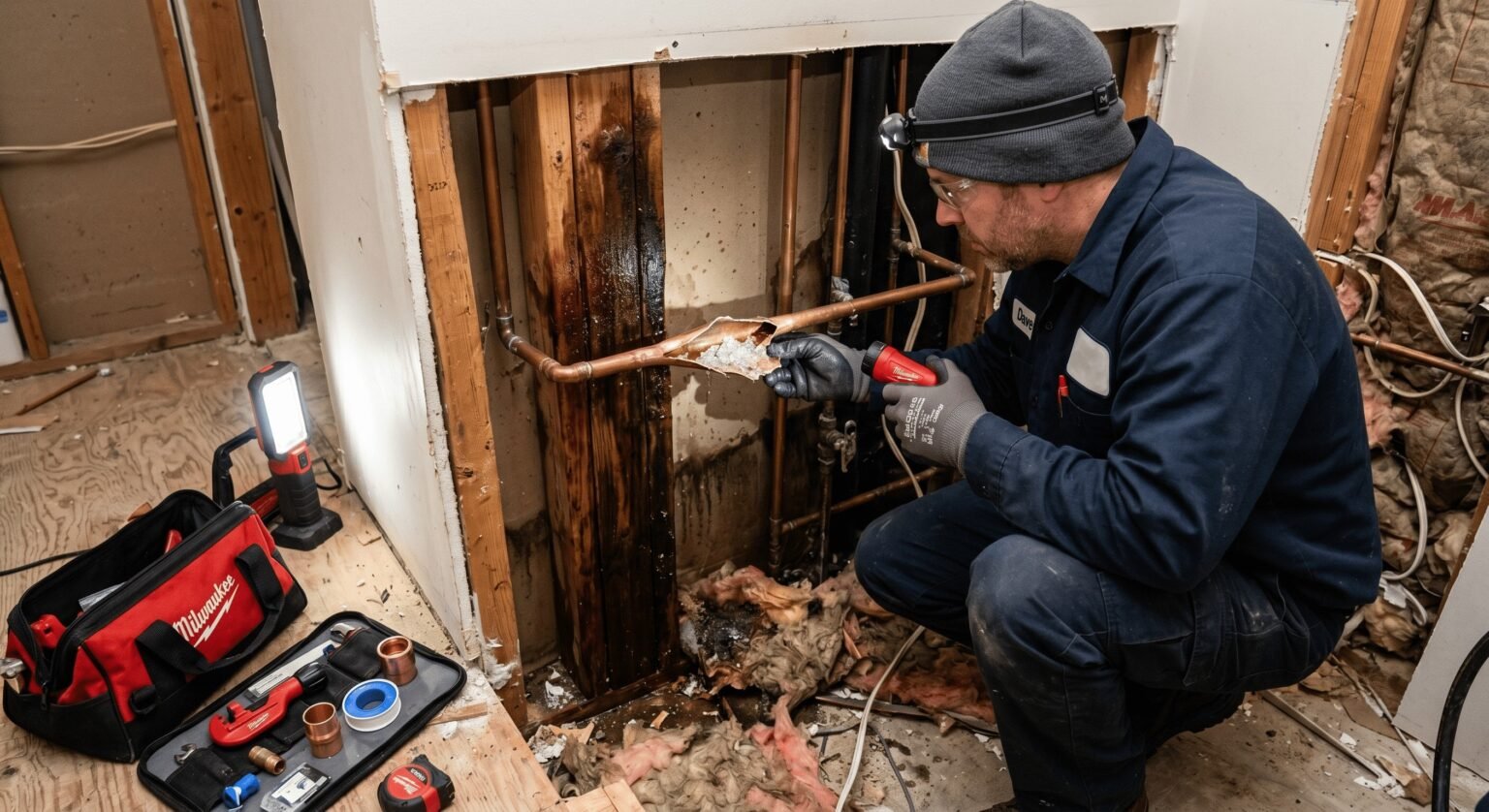
Once the leak is located, you have three ways to fix it: a spot repair through the slab, a reroute overhead, or a partial or whole repipe. Bulwark Plumbing prices each option that fits, in writing, and you choose.
TSBPE 47173Spot, Reroute Or Repipe3 Year Repipe Warranty24/7 Emergency Line
The Short Answer
Slab leak repair means one of three things: opening the floor at the marked spot and repairing the pipe, rerouting the leaking line through the walls and attic, or repiping part or all of the house. A spot repair suits a first leak in sound pipe. A reroute or repipe suits pipe that has leaked before or is failing along its length.
Bulwark Plumbing does slab leak repair across Grapevine, Southlake, Colleyville and 52 cities in DFW from our shop at 720 Industrial Blvd in Grapevine. You get a written flat price for each option before work starts.
What Happens Before Slab Leak Repair Starts?
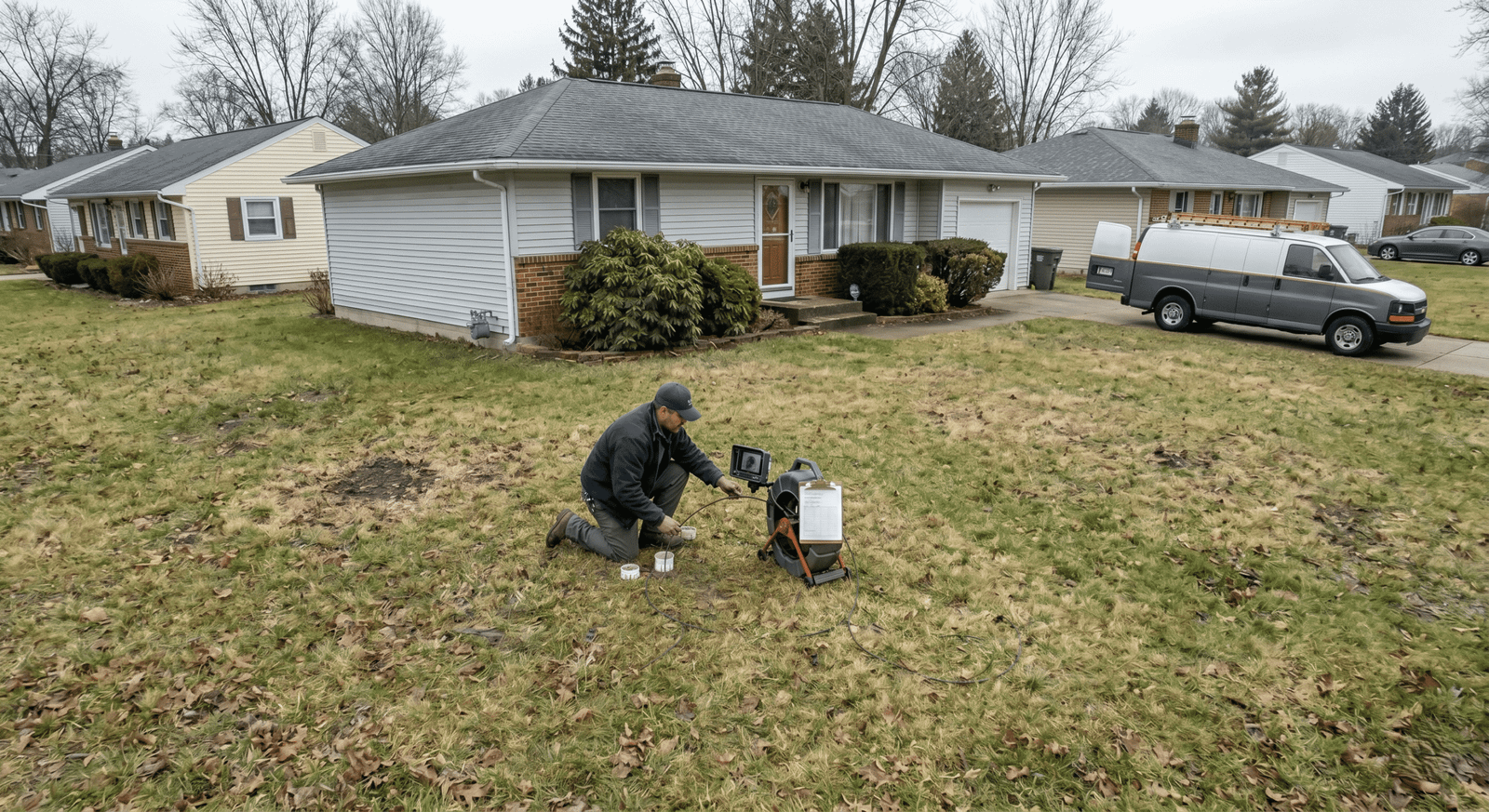
The leak has to be found first. Slab leak repair starts from a located, recorded leak: pressure testing
tells us whether the hot or cold line is leaking, and acoustic equipment marks the spot under the floor. Our
leak detection page covers how that works. If you are still deciding whether
you have a leak at all, start with the signs of a slab leak and the
meter test.
Once the location is marked, the technician walks you through what was found and which slab leak repair options
fit your house. Nothing is cut or opened until you have approved a written price. If two or three options are
legitimate, you get a price for each, so the choice is yours and not ours.
Confirm and record the locationThe marked spot, the line it is on (hot or cold) and photos go on record before any slab leak repair begins.
Look at the rest of the pipingAge, material and any earlier leaks tell us whether a spot slab leak repair will hold or whether the line is likely to leak again somewhere else.
Price each option in writingSpot repair, reroute and repipe, where each is legitimate. You see both prices, or all three, side by side.
Pull permits where requiredRepipes are permitted and inspected where the city requires it, and we tell you which inspections apply.
Do the work and restoreConcrete restored on a spot repair, drywall openings patched on a reroute or repipe, and the system pressure tested before we leave.
What Are The Three Options For Slab Leak Repair?
The three options are a spot repair through the slab, a reroute of the leaking line overhead, and a
partial or whole repipe. Each is a legitimate slab leak repair in the right house. The table lays out what
each involves and where it fits.
Option
What it involves
Often fits when
Trade-off
Spot repair through the slab
Cut an opening in the floor at the recorded location, repair the pipe, restore the concrete
A first leak in pipe that is otherwise sound, under flooring that is easy to lift
The floor covering at that spot has to be replaced, and the rest of the old line stays under the slab
Reroute overhead
Abandon the leaking run under the slab and run new pipe through walls and the attic
A run that has leaked before, or a leak under cabinets, tile or wood you want to keep
Drywall openings to patch, but no concrete work and no new pipe left in the slab
Partial or whole repipe
Replace a group of lines or the whole supply system, usually overhead, in copper, PEX or CPVC
A second or third leak, or pipe that is failing along its length
The largest job, but it ends the cycle of repeat leaks
Spot Repair Through The Slab
A spot slab leak repair goes straight to the leak. The floor covering is lifted at the marked location, an
opening is cut through the concrete, the soil is dug out to expose the pipe, and the damaged section is
repaired. The system is pressure tested, the hole is backfilled, and the concrete is restored. Flooring
replacement at that spot is usually a separate trade.
It is the most direct slab leak repair, and it suits a first leak on pipe that tests sound elsewhere. Its limit is that
it repairs one point on an old line. The pipe on either side has seen the same water, the same soil movement
and the same years.
Reroute Overhead
A reroute leaves the leaking section in the slab, disconnected, and runs a new line through the walls and
the attic to the same fixtures. No concrete is cut for this kind of slab leak repair. The work is in drywall, which is opened where the new pipe
drops into a wall and patched afterward.
A reroute is often the better slab leak repair when the leak sits under a kitchen island, built-in cabinets
or flooring that would be costly to replace, or when the same run has already leaked once. It takes that line
out of the slab for good, so the next pinhole on it cannot happen there.
Partial Or Whole Repipe
A repipe replaces a group of supply lines, or the whole system, usually running overhead. Materials are
copper, PEX or CPVC, and the choice is explained with the quote. Repipes are permitted and inspected where the
city requires it and carry a 3 year Bulwark labor warranty, the same as water line replacement.
It is the largest slab leak repair, and it is the one that ends the pattern of leak after leak. Once a house
has leaked twice in different places, it is usually worth pricing a repipe next to another spot repair.
Bulwark PlumbingA reroute takes the leaking line out of the slab
Bulwark Plumbing, Grapevine & DFW
Leak Found? Get Your Options.
Call and we will walk through your slab leak repair options with you, or book a window online and have it confirmed on the spot.
How Do I Choose Between A Spot Repair, Reroute Or Repipe?
Choose by how many times the house has leaked, where the leak sits, and what the rest of the pipe looks
like. Those three things decide which slab leak repair will last, and the written prices let you weigh them
against cost.
First leak, sound pipe, easy floor: a spot repair is usually reasonable.
Leak under cabinets, tile or wood you want to keep: a reroute avoids cutting that
floor.
Second leak on the same line: a reroute of that line is worth pricing.
Leaks in different places, or pipe failing along its length: a partial or whole repipe
is worth pricing.
Hot line leak with a warm floor: any of the three can work. The hot side often fails
first because heat and expansion add to the wear.
You do not have to decide on the spot. Where more than one slab leak repair is legitimate, you get both
prices in writing, or all three, and you can take the time you need. If the leak is putting water on the floor,
we can isolate the line so the house has water on the other side while you decide on the slab leak repair.
Why Do DFW Houses Need Slab Leak Repair So Often?
Because most DFW homes sit on concrete slabs over expansive clay. The Blackland Prairie soil swells when it
is wet and shrinks when it dries, so the slab moves with the seasons, and the copper water lines under it move
too.
Copper in the slab work-hardens as it flexes and wears pinholes where it rubs against concrete or bends.
Hard water adds to the wear, and the February 2021 freeze split pipe across the area, some of which only showed
up later. That is why slab leak repair is one of the most common calls a North Texas plumber runs, and why the
first leak is rarely the last one on an old copper system.
What About My Foundation?
Water under a slab can soften or wash out the soil that supports it, and in expansive clay it can make the
soil swell unevenly. That is a good reason not to let a known leak run, and a good reason to get slab leak
repair scheduled once the leak is found.
Whether a particular leak has affected the foundation is a question for a foundation professional, not a
plumber. If you see new cracks in walls or tile, doors that stick, or floors that have shifted, have the
foundation looked at separately. Our part is the plumbing: the slab leak repair itself, and restoring any
concrete we opened.
Does Insurance Cover Slab Leak Repair?
Coverage varies by policy, so the only reliable answer comes from your insurer. Some homeowners policies
pay for getting to the pipe and for water damage that resulted, without paying for the pipe repair itself.
Some exclude it. Gradual leaks are often treated differently from sudden ones. Ask before slab leak repair
starts if you plan to file.
What we do is document the slab leak repair. The recorded leak location, photos of the pipe before and after, and a written
invoice that matches the quote all go to you. We do not tell you what your policy covers, because we cannot
know that.
What Warranty Comes With Slab Leak Repair?
Repipes and water line replacement carry a 3 year Bulwark labor warranty. Other work, including a
spot slab leak repair through the floor, carries the 1 year labor baseline. Any manufacturer warranty on materials is
registered in your name.
The warranty covers our work on the section we repaired or replaced. It cannot cover old pipe elsewhere in
the slab, which is one more reason a reroute or repipe is worth pricing on a house that has leaked before.
Water coming up through the floor, or a hot floor and a water heater that will not stop? Close the main shutoff, or the cold inlet on the water heater if the leak is on the hot side, and turn the heater’s gas or power off. Keep clear of water near outlets or cords. Then call (817) 677-9010. The line is answered 24 hours a day, and our target in the core area is a technician on site within 60 minutes.
How Much Does Slab Leak Repair Cost In DFW?
It depends on which option fits, where the leak is, the floor covering above it, and how far a reroute has
to travel, so we do not publish a number that would not hold. What you can rely on when you book slab leak
repair:
The diagnostic fee is quoted on the phone before anyone is sent, and comes off the repair
in full if you go ahead.
You get a written flat price before work starts, and where a spot repair and a reroute
or repipe are both legitimate, you get both prices.
The invoice matches the quote. After hours, weekend and holiday rates are disclosed on
the same call.
Every slab leak repair is done by Bulwark employees under Texas license 47173, never subcontracted, and your call is never
sold to another company. Homeowners in Grapevine,
Southlake, Colleyville and
Keller are a short drive from the shop. If water is actively on the floor, the
24/7 emergency line is the faster route.
Slab Leak Repair Questions
What is the best way to do a slab leak repair?
There is no single best method. A spot repair through the slab suits one leak on pipe that is otherwise sound. A reroute suits a run that has leaked before or sits under flooring you want to keep. A partial or whole repipe suits pipe that is failing along its length. You get a written price for each option that fits your house, and you choose.
Is it better to reroute or repair a slab leak?
For a first leak on otherwise sound pipe, a direct slab leak repair at the marked spot is often the simplest fix. If that line has leaked before, or the leak sits under cabinets or flooring that is costly to replace, a reroute through the walls or attic usually makes more sense, because it takes the line out of the slab for good.
Do you have to break up the floor for slab leak repair?
Only for a spot slab leak repair, and then only at the location recorded during leak detection. A reroute or repipe runs new pipe through walls and the attic, so the slab is not opened. The drywall openings are patched afterward.
Will a slab leak repair damage my foundation?
A spot slab leak repair opens a section of the slab at the leak and restores the concrete afterward. Whether the leak itself has affected the soil or foundation is a question for a foundation professional, not a plumber. If you have cracks, sticking doors or uneven floors, have that checked separately.
Does slab leak repair need a permit?
Repipes are permitted and inspected where the city requires it. Whether a smaller slab leak repair needs a permit depends on the city and the scope of the job. We pull what is required and tell you up front which inspections apply.
What warranty comes with slab leak repair?
Repipes and water line replacement carry a 3 year Bulwark labor warranty. Other repair work carries the 1 year labor baseline, including a spot slab leak repair. The warranty is written on your invoice.
Will insurance pay for slab leak repair?
It depends on your policy. Some policies treat getting to the pipe and repairing resulting water damage differently from fixing the pipe itself, and some exclude it. Ask your insurer before slab leak repair starts. We give you the recorded leak location, photos and a written invoice that matches the quote.
How much does slab leak repair cost in DFW?
The price depends on which option fits, where the leak is, the floor covering above it and how far a reroute has to travel. Bulwark Plumbing quotes the diagnostic fee on the phone, credits it in full if you go ahead, and gives you a written flat price for each legitimate option before any work starts.
Tell us where the leak was found and whether it has leaked before, and we come back with a window. If water is on the floor, call instead: the line is answered around the clock.
Pick an arrival window and have it confirmed while you are still on the page. For anything actively flooding, call instead: the line is answered 24 hours a day.