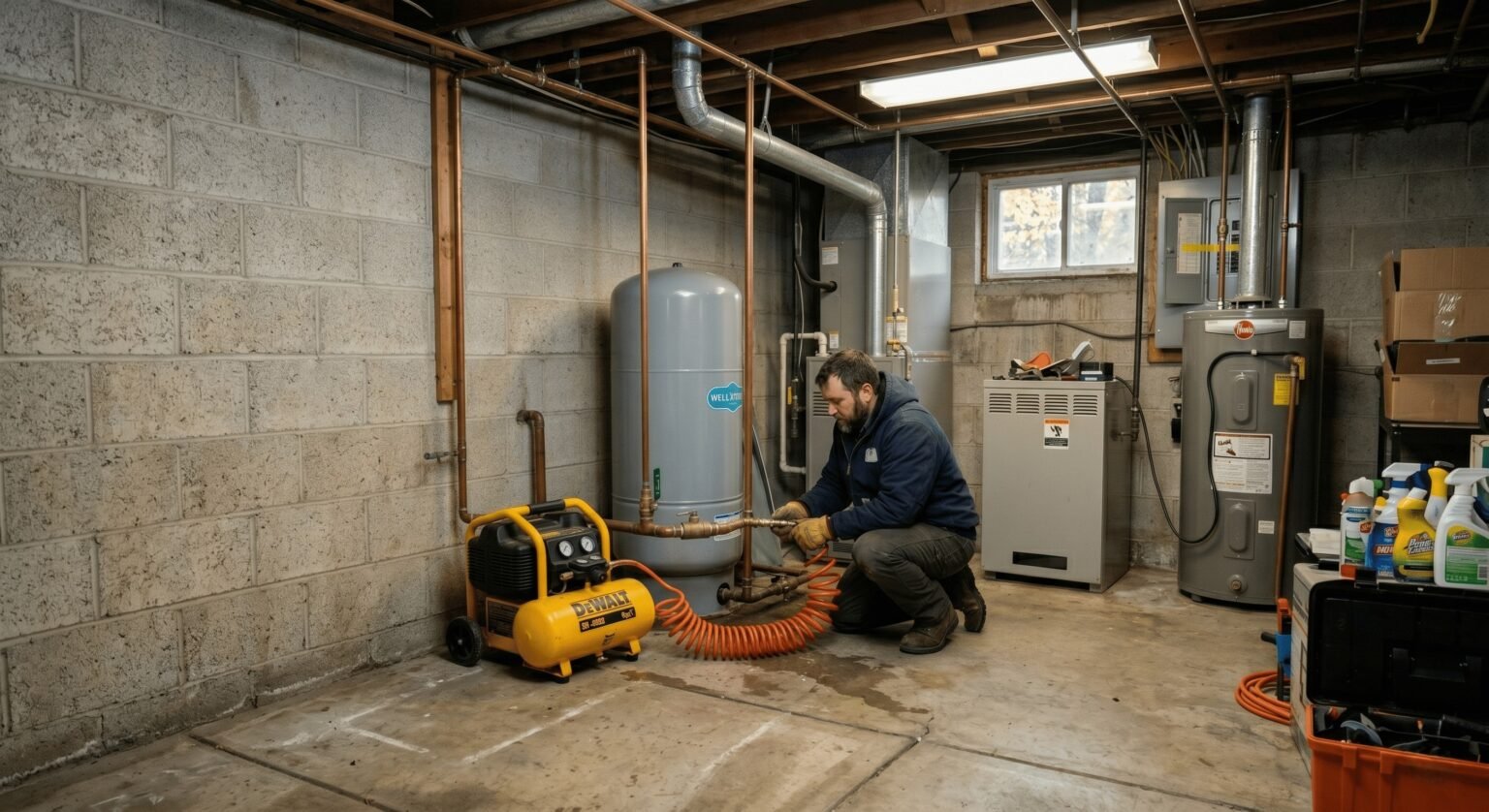
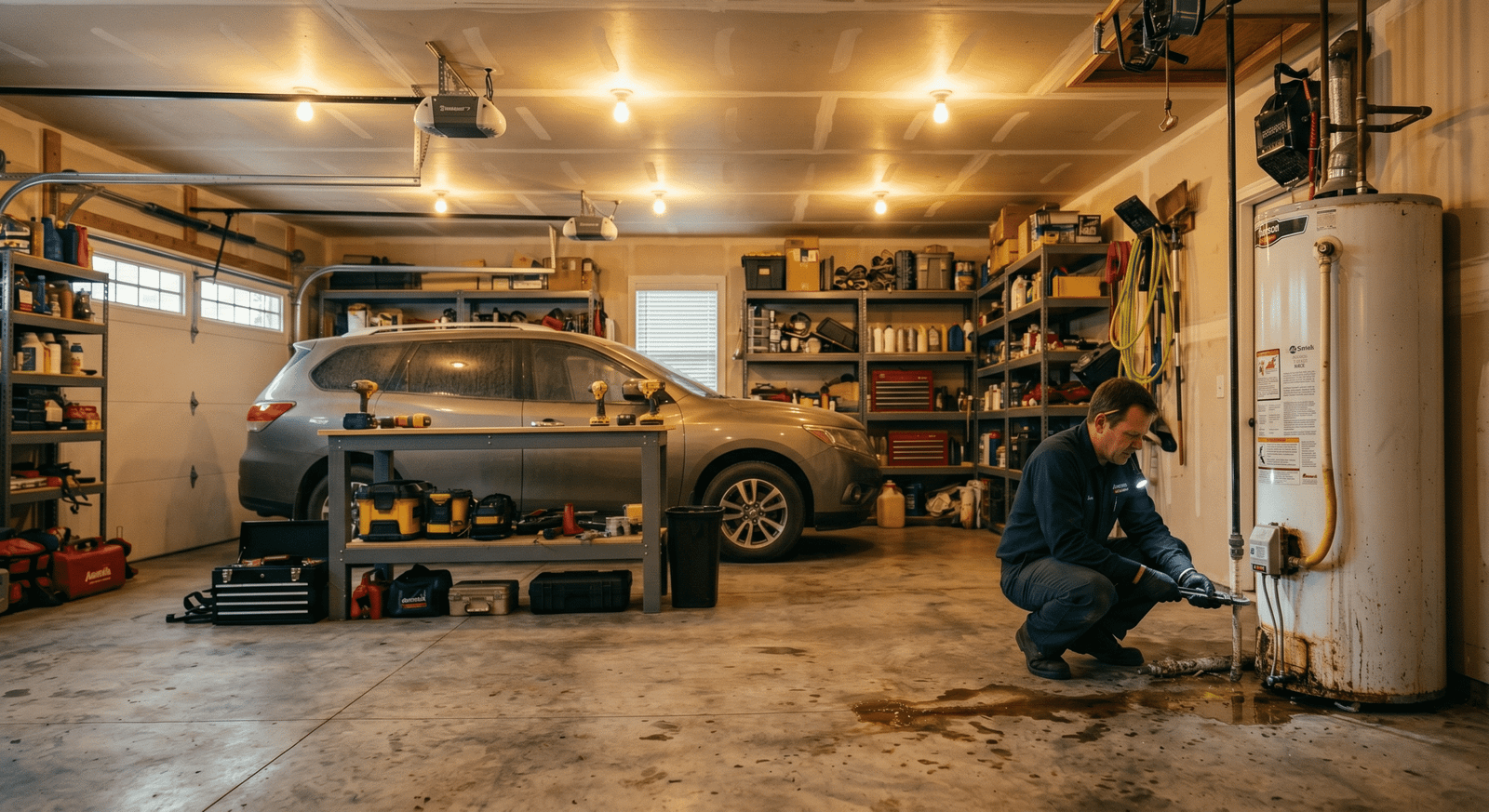
Gas tank water heater in a DFW garage ready for water heater repair by Bulwark Plumbing
Water Heater Repair, Grapevine & DFW

Water Heater Repair & Replacement In DFW

Bulwark Plumbing handles water heater repair and replacement for tank and tankless, gas and electric units across Grapevine and the DFW metroplex. Every water heater repair starts by finding the failed part, then you get a written price for the repair, and for a replacement too when both make sense.

TSBPE 47173Tank & Tankless2 Year Install Warranty24/7 Emergency Line
The Short Answer

Most water heater repair calls come down to one failed part: a heating element, a thermostat, an igniter or thermocouple, a gas valve, or a relief valve. A heater under about 8 years old with one of those failures is worth a water heater repair. One past about 12 years, leaking from the tank itself, or rusting at the base should be replaced.

Bulwark Plumbing diagnoses the heater first, then prices the water heater repair in writing before any work starts. We cover Grapevine, Southlake, Colleyville and 52 cities across DFW from our shop at 720 Industrial Blvd in Grapevine, 24 hours a day.

What Usually Goes Wrong With A Water Heater?

A water heater fails in a handful of predictable ways, and the symptom usually points straight at the part. This is the list our technicians start from on a water heater repair call.

SymptomMost likely causesRepair or replace?
No hot water, electricTripped breaker, tripped high limit reset, failed upper element or thermostatRepair
No hot water, gasPilot out, failed thermocouple or flame sensor, igniter, gas control valve, gas supply offRepair
Hot water runs out fastFailed lower element, broken dip tube, heavy sediment, thermostat set low, heater too small for the houseRepair, unless undersized
Rumbling or poppingSediment and scale on the tank bottomFlush, if the tank is sound
Leak from the topLoose or corroded inlet and outlet connections, relief valveRepair
Leak from the relief valve or its pipeExcess pressure, overheating, or a worn valveFind the cause, then repair
Leak from the bottomDrain valve, or the tank itselfValve: repair. Tank: replace
Rusty hot waterSpent anode rod, or rust inside the tankDepends on age

Why Is There No Hot Water?

On an electric heater, no hot water usually means a tripped breaker, a tripped high limit switch, or a failed upper element or thermostat. On a gas heater it usually means the pilot is out or the part that proves the flame, the thermocouple or flame sensor, has failed. Those are among the most common water heater repair calls we run, and most of them are fixed in one visit.

A breaker that trips again right after you reset it is telling you something: a shorted element or a wiring fault. It needs a water heater repair, not another reset. The same goes for a pilot that lights and then goes out when you release the knob, which almost always points to the thermocouple, a quick water heater repair. If you smell gas at any point, stop, leave the house and call the gas utility from outside.

Bulwark Plumbing technician on a DFW plumbing call
Bulwark Plumbing, Grapevine & DFW
No Hot Water?

If the heater is leaking, shut off the gas or power and the cold inlet, then call. Otherwise, book water heater repair online and have it confirmed on the spot.

Call (817) 677-9010

Why Does The Hot Water Run Out So Fast?

Hot water that runs out early usually means the heater is only heating part of the tank. On an electric unit that is almost always a failed lower element, a straightforward water heater repair, which leaves only the top third or so of the tank hot. On any tank, a broken dip tube lets incoming cold water mix at the top instead of the bottom, and a thick layer of sediment takes up room that should hold water.

The other possibility is that nothing is broken and the heater is simply too small for the household, after a family grows or a soaking tub goes in. Water heater repair will not fix that, and we will say so rather than sell you a part.

Why Is My Water Heater Rumbling Or Popping?

Rumbling and popping come from sediment and scale on the bottom of the tank. Water trapped under the layer turns to steam when the burner or lower element heats it, and the bubbles crack their way up through the crust. North Texas water is hard, so this shows up sooner here than in soft water regions.

On a tank that is otherwise sound, a thorough flush during a water heater repair visit often quiets it. On an old tank with years of buildup, the noise means the bottom has been running hot for a long time, which counts against water heater repair and toward replacing it.

Bulwark technician performing water heater repair on a residential tank heater
Bulwark PlumbingTesting a tank before recommending a water heater repair

Where Is My Water Heater Leaking From?

Where the water comes from decides whether a leaking heater can be repaired. Leaks from the top or from the valves are usually a routine water heater repair. A leak from the tank itself is not, because the steel inner tank has rusted through and no patch holds on a pressurized tank.

  • From the top. The cold inlet and hot outlet connections corrode, especially where copper meets steel without a proper dielectric fitting. Replacing them, with dielectric fittings, is usually a one visit water heater repair.
  • From the temperature and pressure relief valve. The T&P valve is the brass valve near the top with a pipe running down the side. If it is dripping or discharging, it is either worn or doing its job because temperature or pressure is too high. Replacing the valve is a common water heater repair, but only after we find out why it opened. Never cap or plug that pipe. Thermal expansion in a home with no expansion tank is a common cause.
  • From the drain valve at the bottom. Plastic drain valves crack and seep, often after a flush. Swapping it for a brass valve is a simple water heater repair.
  • From under the tank, with no obvious source. If the fittings and valves are dry and water is pooling under the heater or rust is showing at the base, the tank itself has failed. That heater is past water heater repair and needs to be replaced.

Our article on whether a leaking water heater should be repaired or replaced goes through each leak point in more detail.

Why Is My Hot Water Rusty?

Rusty water from the hot taps only, with clear cold water, points at the water heater. The usual cause is a spent anode rod, the sacrificial metal rod that corrodes so the tank does not. Once it is gone, the tank starts rusting from the inside.

If the heater is young, replacing the anode is a worthwhile water heater repair and can add years to the tank. On an old heater, rusty water usually means the tank itself is corroding, and water heater repair will not reverse that. If both hot and cold water are discolored, the cause is upstream in the piping or the city supply rather than the heater.

Water Heater Repair Or Replacement: Which Makes Sense?

Water heater repair makes sense on a heater under about 8 years old with a failed element, thermostat or valve. Replace one past about 12 years, one leaking from the tank itself, or one rusting at the base. Between 8 and 12 years, the decision depends on the part, the condition of the tank and what the repair costs compared with a new heater.

Hard water matters to that middle band. Scale shortens tank life in North Texas, so a 10 year old heater here has often lived harder than its age suggests. When a water heater repair and a replacement are both legitimate options, you get a written flat price for each and decide for yourself. We do not talk anyone out of a sound repair.

The quick version: under about 8 years with a failed part, water heater repair is the right call. Past about 12 years, leaking from the tank, or rusting at the base, replace it. In between, ask for both prices.

Tank Or Tankless: Which Is Better?

Neither is better for every house. A tank heater costs less to install, and water heater repair on a tank is usually simpler. A tankless heater gives continuous hot water and takes up far less space, but it costs more to install and needs regular descaling in hard water.

Sizing a tank is about the first hour rating, how much hot water it can deliver in an hour of heavy use, matched to how many people shower in the morning. Sizing a tankless unit is about flow rate at a given temperature rise. Incoming water in DFW is much colder in January than in August, so size for winter.

Gas line sizing is the part that surprises people. A gas tankless heater burns far more gas at full fire than a tank heater does, so the existing line that fed a tank is often too small. An undersized line starves the unit and it short cycles or delivers lukewarm water. Converting usually means upsizing the gas line, new venting, and often an electrical outlet for the controls. We check all three before pricing it.

Descaling is the maintenance that keeps a tankless unit alive in hard water. Scale coats the heat exchanger and the unit starts throwing error codes and losing output. Flushing it with a descaling solution on the schedule the manufacturer sets, typically about once a year in hard water, is cheaper than any tankless repair. Most tankless water heater repair calls come down to scale, an igniter, a flame sensor or a clogged inlet filter. We handle water heater repair and installation on both types, and our 24/7 emergency line covers a heater that fails overnight.

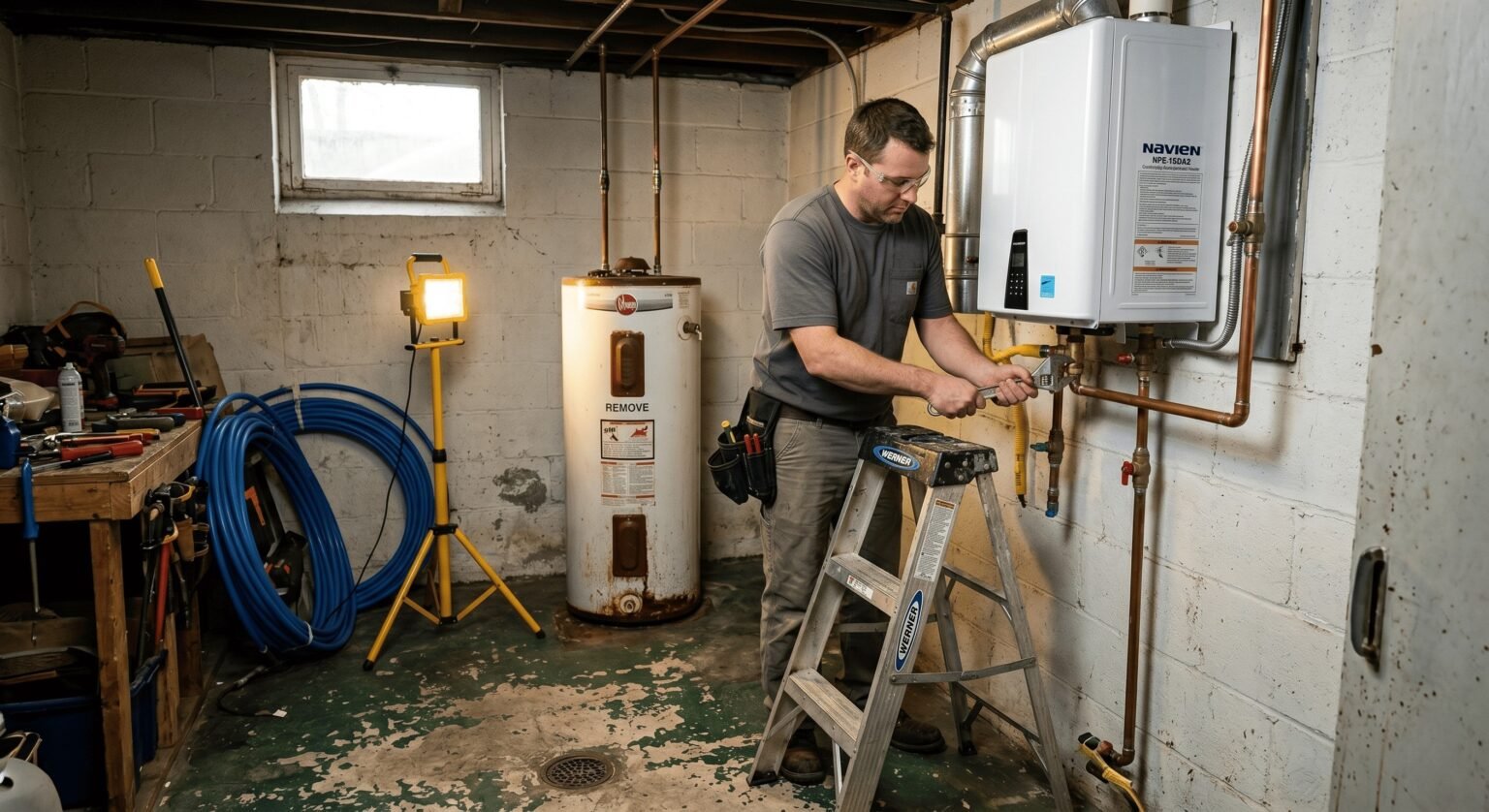
Wall mounted gas tankless water heater installed in a North Texas home
Bulwark PlumbingA gas tankless unit needs the gas line to match its demand

What Comes With A Water Heater Replacement?

When water heater repair no longer makes sense, a proper replacement includes the safety items an older installation is often missing. Requirements vary by city and by where the heater sits, so treat this as what we check, not a code book.

  • T&P discharge line. The relief valve’s pipe has to run, full size and without a cap or a valve, to an approved termination where discharging hot water will not hurt anyone.
  • Expansion tank. Where the home has a pressure reducing valve or a check valve, the plumbing is a closed system and heated water has nowhere to expand. An expansion tank absorbs it.
  • Drain pan. Where a leak would damage the house, such as an attic or upstairs closet, the heater goes in a pan with a drain line.
  • Gas connection and venting. A proper gas connection with a shutoff and sediment trap, checked for leaks, and a vent that is sized, pitched and connected correctly.
  • Permit and inspection. Where the city requires one, we pull the permit and the installation is inspected.

Water heater installations carry a 2 year Bulwark labor warranty, and the manufacturer warranty is registered in your name, not ours, so it follows the house and does not depend on us. Water heater repair carries our one year labor warranty as a baseline.

How Do I Shut Off A Leaking Water Heater?

Turn off the heat source first, the gas control or the breaker, then close the cold water valve above the heater so the tank stops refilling. Those two steps hold the damage until the water heater repair.

  1. Keep clear of the waterWater near an electric heater or an outlet is an electrical hazard. If the floor around an electric unit is wet, switch the breaker off before you step in it, or call us.
  2. Cut the heatGas: knob to off, or close the gas valve on the supply line. Electric: turn its breaker off. Heating an empty or draining tank damages it.
  3. Close the cold inletThe valve on the cold line at the top of the heater. That stops the tank refilling and limits the leak to what is already in it.
  4. If the inlet valve will not closeShut the main water valve to the house. Old gate valves above heaters often seize, and forcing one can break it.
  5. Do not drain a hot tank yourselfWater inside can be scalding. If the leak is heavy, connect a hose to the drain valve and run it outside only once the water has cooled, or leave it for the water heater repair visit.
  6. CallCall (817) 677-9010. The line is answered 24 hours a day, and a licensed plumber will tell you whether the water heater repair can wait for morning.
Smell gas near the heater? Do not touch the controls or any switches. Leave the house, call the gas utility from outside, and call us once you are safe.

How Do You Maintain A Water Heater In Hard Water?

Flush a tank heater about once a year and have the anode rod checked every few years, which we can do on any water heater repair visit. Flushing drains out the sediment that hard water drops in the bottom of the tank. A healthy anode rod keeps the tank from rusting.

Check that the T&P valve is not dripping, keep the area around a gas heater clear so it can draw combustion air, and set the thermostat around 120°F unless you have a reason to run it hotter. On a tank that has never been flushed, have us do the first one, since old drain valves often fail to reseal and turn a flush into a water heater repair. Routine maintenance does not replace water heater repair when a part fails, but it is the cheapest way to push that day further out.

How Much Does Water Heater Repair Cost In DFW?

It depends on the part that failed, whether the heater is gas or electric, tank or tankless, and how it is installed, so we do not publish a number that would not hold. What you can rely on with every water heater repair:

  • The diagnostic fee is quoted on the phone, before anyone is sent, and comes off the price in full if you go ahead.
  • You get a written flat price before work starts. You approve it, we begin, and the invoice matches the quote.
  • Repair and replacement are priced side by side whenever both are legitimate, so you can weigh a water heater repair against a new heater.

Every technician is a Bulwark employee under Texas license 47173, never a subcontractor. Water heater repair is booked online in about a minute, or by phone for anything leaking. We also handle leak detection when the water on the floor turns out not to be the heater at all. Homeowners near the shop can read about our service in Grapevine.

Water Heater Questions

How long does a water heater last in North Texas?

A tank water heater commonly lasts somewhere around 8 to 12 years, and hard water pushes it toward the short end because scale builds up inside the tank and on the elements. Flushing, a healthy anode rod and correct pressure all help. Once a tank passes about 12 years, water heater repair is usually money spent on a unit that is close to the end anyway.

Is it safe to keep using a water heater that is leaking?

If the leak is a slow drip from a fitting or the drain valve, it is usually safe for a short time while you arrange a water heater repair, as long as the water is not reaching anything electrical. If water is coming from the tank itself, or the relief valve is discharging hot water, shut the heater off and close the cold supply valve. A tank that has started to leak can fail further without warning.

Why does my water heater make a popping or rumbling noise?

That noise is almost always sediment and scale on the bottom of the tank. Water trapped under the layer flashes to steam as the burner or lower element heats it, and the bubbles pop through. It is a sign of lost efficiency and extra stress on the tank, and in hard water areas it often means the tank has never been flushed. On a sound tank, a flush during a water heater repair visit usually quiets it.

Why does my hot water smell like rotten eggs?

A sulfur smell from the hot side only usually comes from a reaction between the tank's anode rod and bacteria in the water, which produces hydrogen sulfide gas. It is not normally a sign the heater is failing. Replacing the anode with a different type and disinfecting the tank is the usual water heater repair for it. If you smell gas rather than sulfur near a gas appliance, leave the house and call the gas utility from outside.

Do I need a permit to replace a water heater in DFW?

Many DFW cities require a permit and an inspection for a water heater replacement, especially for gas units. Requirements differ from city to city. Where the city requires it, Bulwark Plumbing pulls the permit and the installation is inspected, so you have a record of a compliant installation when you sell the house.

How long does water heater repair take?

Most water heater repair visits that involve a common part, such as an element, thermostat, thermocouple or relief valve, are finished in one trip. Less common parts, especially for tankless units and some gas control valves, may have to be ordered. We tell you which it is before we leave.

Do you do water heater repair on tankless units?

Yes. Most tankless water heater repair calls come down to scale on the heat exchanger, an igniter, a flame sensor or a clogged inlet filter. Some tankless parts have to be ordered, and we tell you before we leave whether that is the case.

Is there a warranty on water heater repair?

Yes. Every water heater repair carries our one year labor warranty as a baseline. A new installation carries two years, and the manufacturer warranty is registered in your name.

Can I do my own water heater repair?

Simple checks are fine: resetting a tripped breaker once, relighting a pilot by the instructions on the tank, or checking the thermostat setting. Gas valves, burners, venting and wiring inside the heater call for a licensed water heater repair, because a mistake there is a fire, scald or carbon monoxide risk.

How much does water heater repair cost?

Water heater repair cost depends on the part that failed, whether the heater is gas or electric, tank or tankless, and how it is installed. Bulwark Plumbing quotes the diagnostic fee on the phone before anyone is sent, credits it in full if you go ahead, and gives you a written flat price before any work starts. Where both repair and replacement make sense, you get both prices.
Request Service

Request Water Heater Repair

Tell us the symptom, whether the heater is gas or electric, and its age if you know it, and we come back with a window for the water heater repair. If the tank is leaking, call instead.

Bulwark Plumbing
720 Industrial Blvd Ste 500, Grapevine, TX 76051
(817) 677-9010, open 24 hours

By submitting you agree we may call or text you about this request. Message and data rates may apply. Reply STOP to opt out. See our Privacy Policy and Terms.

Online Booking

Book Water Heater Repair Online

Pick a window for your water heater repair and have it confirmed while you are still on the page. If the tank is leaking, call instead: the line is answered 24 hours a day.