It depends on where the water is coming from. A leak at a fitting, supply line or valve is usually a repair. A water heater leaking from the tank itself cannot be repaired and needs to be replaced.
TSBPE 4717324/7 Emergency LineUpfront Flat PricingGrapevine Shop, All DFW
The Short Answer
With a water heater leaking, find the source first. Leaks from the top connections, the drain valve or the T&P valve can usually be repaired. A leak from the tank body or a rusted base means the tank has corroded through, and the only fix is replacement.
When you have a water heater leaking, Bulwark Plumbing diagnoses the source, gives you a written flat price, and where repair and replacement are both legitimate, gives you both. We work from our Grapevine shop across Southlake, Colleyville and the rest of DFW, 24 hours a day.
What Should I Do Right Now With A Water Heater Leaking?
Shut off the cold water supply to the heater and turn off its energy source: the gas control for a gas
unit, the breaker for an electric one. That stops the tank from refilling and keeps it from heating with no
water in it. If you smell gas at any point, leave the house and call the gas utility from outside.
Gas: turn the control to OFFOn most gas water heaters the control knob on the front of the thermostat goes to OFF or PILOT. The gas shutoff valve on the supply line beside the heater can also be closed: the handle crosswise to the pipe is off.
Electric: switch off the breakerTurn off the water heater breaker at the panel before touching anything else. Do not stand in water to do it. An electric heater must not run with the tank drained, because the elements burn out.
Close the cold water inletThe valve is on the cold supply pipe at the top of the heater. Closing it stops new water entering the tank, so a water heater leaking slowly will usually stop or nearly stop.
Drain only if you have toIf you have a water heater leaking from the tank itself and no drain or pan to catch it, connect a garden hose to the drain valve, run it outside or to a floor drain, and open a hot tap in the house so the tank can drain. The water can be scalding; let it cool first if you can.
Call a plumberCall (817) 677-9010. Tell us where the water is coming from, the heater’s age if you know it, and whether it is gas or electric.
Never plug or cap the T&P valve. The temperature and pressure relief valve is the safety device that stops a tank from rupturing. If you find a water heater leaking from this valve, the tank is seeing too much heat or pressure, or the valve has failed. Either way it needs a plumber, not a cap.
Where Is My Water Heater Leaking From?
With a water heater leaking, the location of the water decides almost everything, so look before you call. Dry the area with a towel,
then watch where new water appears: at the top, from the side valve, from the drain valve near the bottom, or
from underneath the tank.
Where the water is
What it usually means
Usually
Top of the heater, at the pipes or flexible supply lines
A loose or corroded fitting, a failed supply connector, or a worn nipple
Repair
Dripping from the T&P valve or its discharge pipe
Excess pressure or temperature, thermal expansion, or a worn valve
Repair, then find out why
From the drain valve near the bottom
The valve is not fully closed, or its washer or body has failed
Repair
Under the tank, with no source above it
The inner tank has corroded through
Replace
Rust or wet staining at the base
Corrosion of the tank bottom
Replace
Beads of water on a cold tank or after a heavy hot water draw
Condensation, not a leak
Watch it
Top fittings and supply lines
A water heater leaking at the top is usually leaking from a connection, not from the tank. The cold inlet,
hot outlet and their flexible connectors are parts that can be tightened or replaced. Check that the water is
not running down from a pipe or fitting above the heater before blaming the heater itself.
The T&P valve
A water heater leaking from the T&P valve is either doing its job or has a worn valve. Causes include water
temperature set too high, high incoming water pressure, and thermal expansion in a closed system where an
expansion tank is missing or has failed. Replacing the valve without checking those leaves the cause in
place.
The drain valve
Drain valves on many tanks are plastic and can drip after the tank has been flushed or bumped. A water
heater leaking at the drain valve is a repair, provided the tank around it is sound.
Water heater leaking from the bottom of the tank
A water heater leaking from underneath, with nothing wet above, is almost always a failed tank. This is the
leak that does not stop and cannot be fixed.
Condensation
Gas water heaters can sweat when they fire with cold water in the tank, and the drips may sizzle on the
burner. If the water stops once the tank is up to temperature and the area dries, it was condensation. If it
keeps coming, you have a water heater leaking, not sweating.
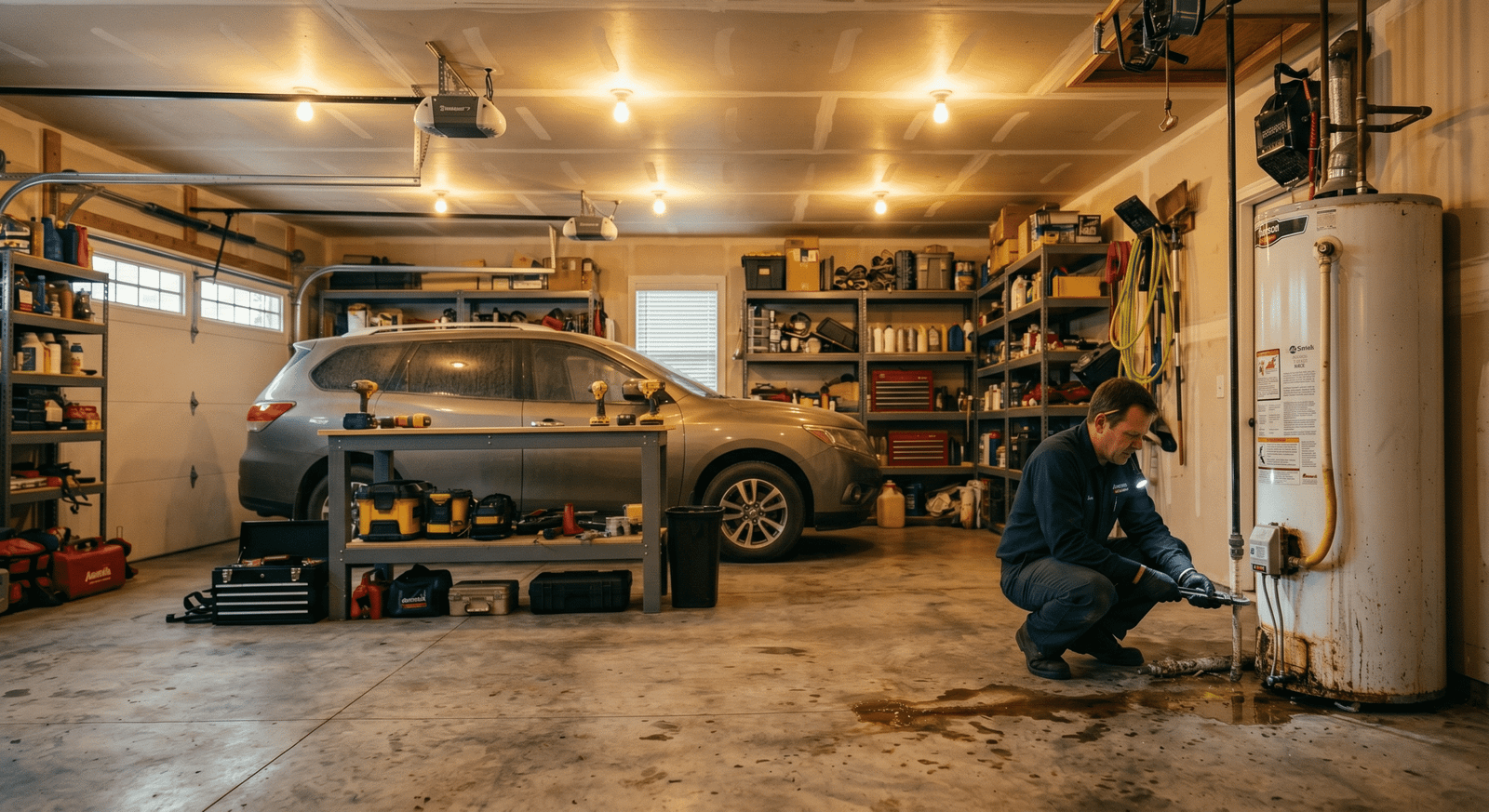
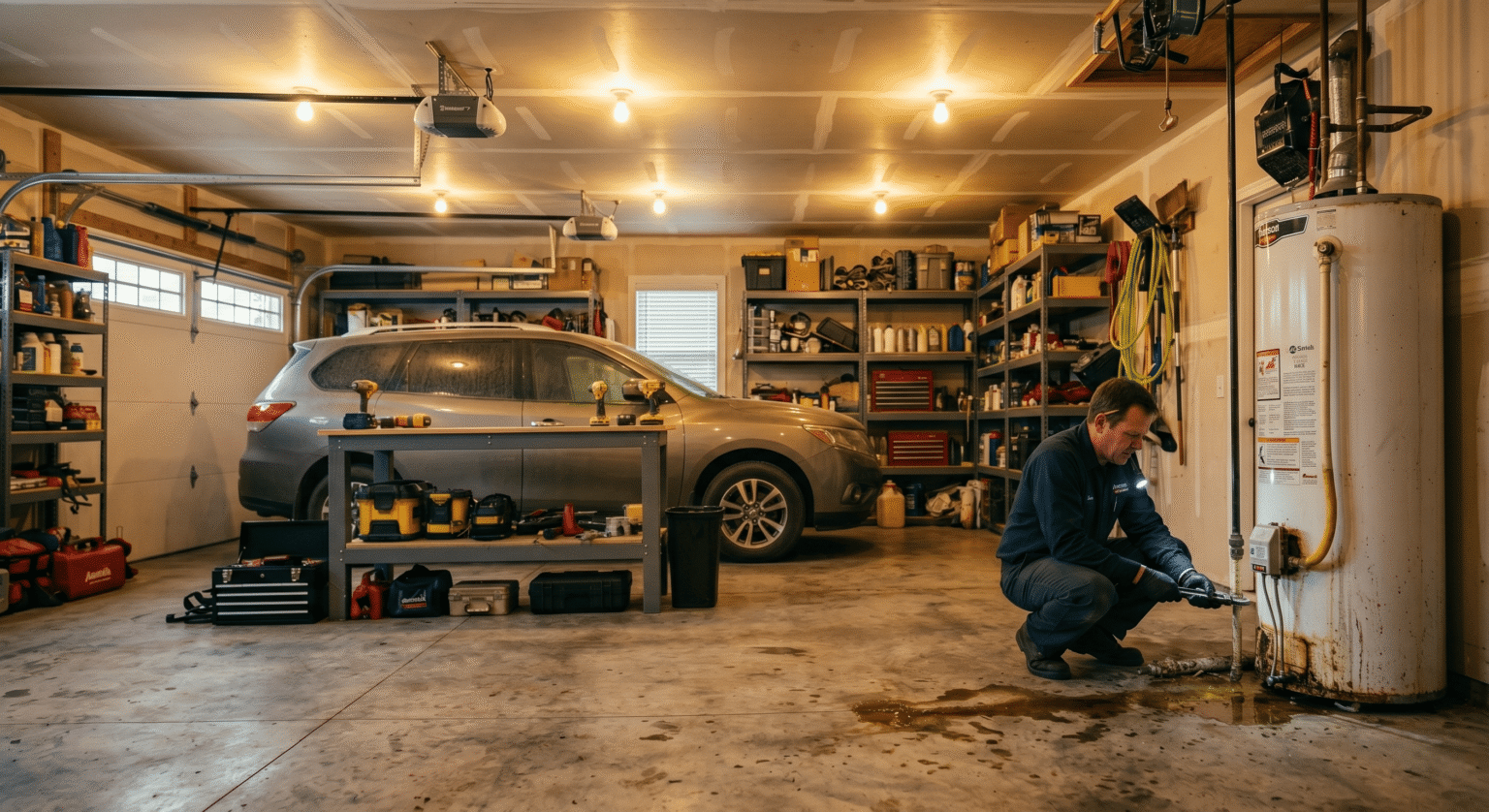
Bulwark PlumbingChecking a water heater leaking in a garage for the source
Bulwark Plumbing, Grapevine & DFW
Water Heater Leaking?
With a water heater leaking, shut off the cold supply and the gas or power, then call. If it is a slow drip into a pan, book a window online and have it confirmed on the spot.
Why Can’t A Water Heater Leaking From The Tank Be Repaired?
Because a water heater leaking from the tank body is corroding through from the inside, and there is no safe way to patch a
pressurized, heated steel vessel. A tank water heater is steel lined with glass, protected by a sacrificial
anode rod. Once the anode is used up, the steel corrodes, and by the time water reaches the floor the wall
is thin in more places than the one that is leaking.
Sealants and patches on a water heater tank do not hold, and a tank that fails completely releases its
whole contents at once. With a water heater leaking from the tank body, replacement is the only fix that
lasts.
Water Heater Leaking: Repair Or Replace?
Repair it if the leak is at a fitting or valve and the heater is under about eight years old. Replace it if
the tank itself is leaking, the base is rusting, or the heater is past about twelve years. That is Bulwark
Plumbing’s working rule of thumb, and between those ages the decision depends on the part that failed and the
condition of the tank.
Under about 8 years, failed part: a failed element, thermostat or valve is usually a
repair. The tank still has life in it.
About 8 to 12 years: with a water heater leaking at a fitting or valve, a repair can
still be sensible. A second
or third repair in a short span is a sign to start planning replacement.
Past about 12 years: replacement usually makes more sense, especially with any water
heater leaking near the tank.
Water heater leaking from the tank or rusting at the base, at any age: replace.
Where repair and replacement are both legitimate for a water heater leaking, we give you both prices in writing so the decision is
yours. Replacements are permitted and inspected where the city requires it, carry a two year Bulwark
warranty on the install, and the manufacturer warranty is registered in your name. More on the service itself
is on our water heater repair and replacement page.
Should I Replace A 12-Year-Old Water Heater?
If you have a 12-year-old water heater leaking from the tank, yes. If it is working and dry, you do not have to replace it today, but at
twelve years it is past the point where Bulwark would recommend repairing it, so it is worth planning the
replacement on your schedule instead of waiting for it to fail.
A planned replacement lets you choose the unit and the day. A failed one picks both for you, often with a
water heater leaking across a garage or closet floor first. In North Texas, where hard water shortens tank
life, a 12-year-old tank has usually had a hard working life.
How Do I Tell How Old My Water Heater Is?
With a water heater leaking, its age is half the repair or replace decision, so read the serial number
on the label on the side of the tank. Most manufacturers encode the manufacture
date in it, often as a letter or two digits for the month and two digits for the year near the start, but the
format varies by manufacturer and has changed over time.
The manufacturer’s website or customer service line will decode it if the pattern is not obvious. A
plumber looking at a water heater leaking can usually tell you on the spot. If the label is missing or unreadable, the date on the
installation permit or your home inspection report can help.
Does Hard Water Make A Water Heater Leak Sooner?
It can, and it is a common reason for a water heater leaking early here. North Texas water is hard, and the minerals settle in the bottom of the tank as sediment. Sediment
makes the heater work harder, makes the tank rumble or pop, and sits on the bottom of the tank where
corrosion and overheating do their damage.
Flushing the tank to remove sediment and checking the anode rod are the two maintenance steps that help.
On a tank that has never been flushed in many years, though, flushing can disturb sediment that was sealing a
weak spot, and a drain valve that has not been opened in a decade may not close again. If your heater is old,
has never been serviced, or already has a water heater leaking at the drain valve, have a plumber look at it
first.
Is A Water Heater Leaking An Emergency?
A water heater leaking is an emergency when water is spreading and you cannot stop it, when it is near electrical wiring or
outlets, or when you smell gas. A small drip at a fitting, with the cold supply closed and the water caught in
a pan, can usually wait for a scheduled visit.
Our 24/7 emergency line is answered around the clock. The 60 minute
arrival is a target in our core area, not a guarantee, and the dispatcher gives you an actual window on the
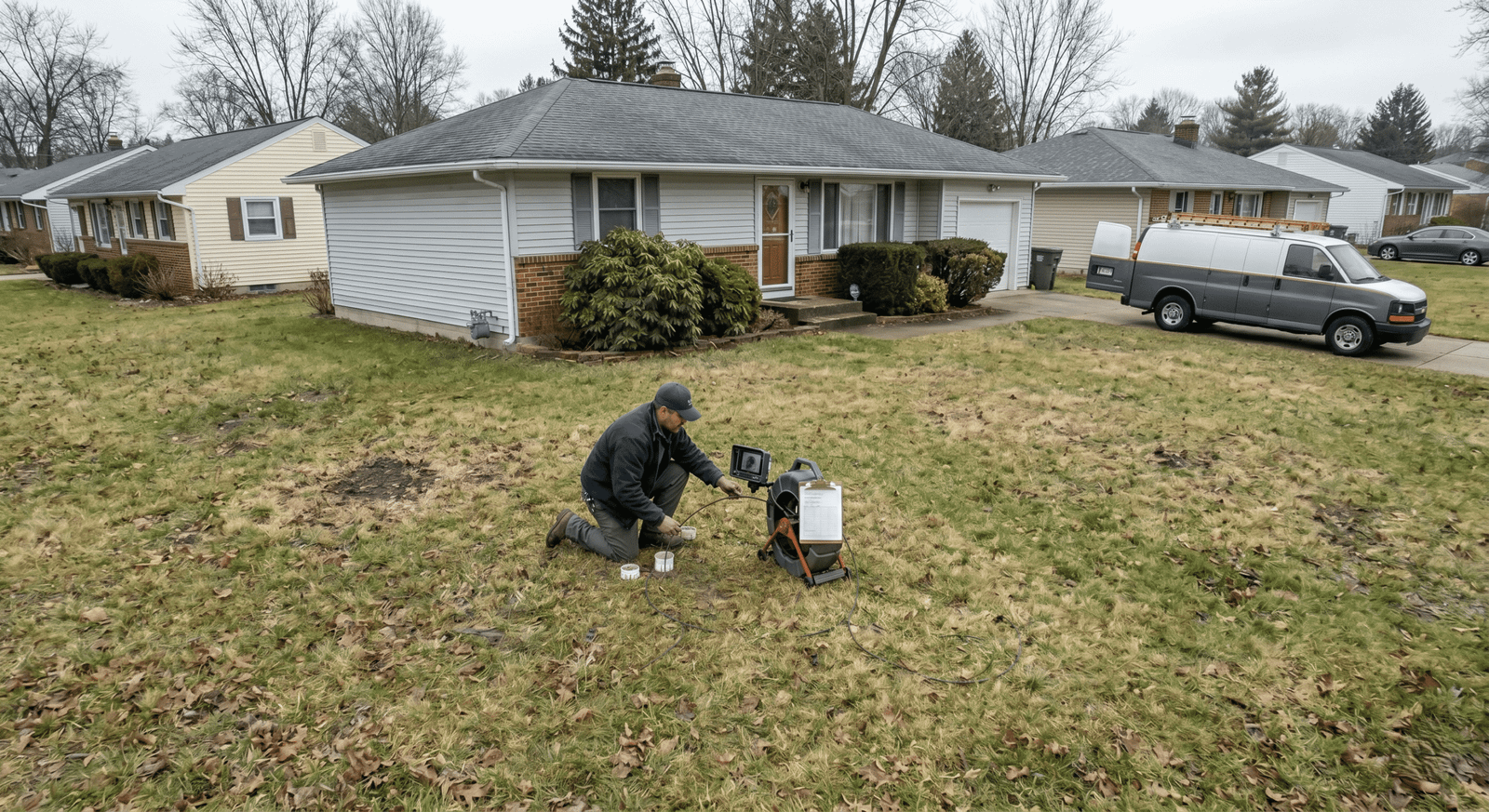
call along with any after hours rate. If the water has reached the slab or you suspect a hidden line is
involved, see signs of a slab leak and our
leak detection service.
How Bulwark Plumbing Handles A Water Heater Leaking
We find the source before we price anything. A Bulwark technician, our own employee working under Texas
license TSBPE 47173, confirms where the leak is coming from, checks the age and condition of
the tank, and tells you plainly whether your water heater leaking is a repair or a replacement. The diagnostic fee is quoted on the
phone before anyone is sent and credited in full if you go ahead, and you approve a written flat price before
any work starts.
If you have a water heater leaking in Grapevine, Southlake, Colleyville or elsewhere in DFW, call
(817) 677-9010 or book online. If it is a slow drip and the
supply is off, booking takes about a minute and confirms the window on the spot. More homeowner questions are
answered on our plumbing answers page.
Water Heater Leaking Questions
Is it dangerous to have a water heater leaking?
A water heater leaking is mostly a damage risk, but there are real hazards around it. Water near an electric heater's wiring or a gas heater's burner is a problem, and a T&P valve that discharges repeatedly means the tank is seeing too much pressure or heat. If you smell gas, leave the house and call the gas utility from outside.
Can a water heater leak and still work?
Yes. Many tanks keep heating normally while they leak, which is why people put a pan under them and wait. A water heater leaking from the tank body only gets worse, and when it fails completely it can release the whole tank onto the floor at once.
Does homeowners insurance cover a leaking water heater?
Policies commonly treat the heater itself as a maintenance item and may cover sudden water damage it causes, while damage from a water heater leaking slowly for weeks is often excluded. Coverage varies a great deal, so check your own policy or ask your agent.
Is a pan under the water heater enough protection?
A drain pan catches small drips and condensation and buys time, especially when it is piped to a drain. It will not hold a tank that fails outright, so water in the pan is a sign of a water heater leaking somewhere, and the source still needs finding.
How long do water heaters last in North Texas?
Hard water is the main thing that shortens tank life here, because scale and sediment build up inside the tank. Age is a planning signal, not a deadline: Bulwark's rule of thumb is to repair a failed part on a heater under about eight years and to replace one that is past about twelve. A water heater leaking from the tank itself is a replacement at any age.
Do I need a permit to replace a water heater?
Many DFW cities require one for water heater replacement, and gas units also involve venting and gas connection rules. Bulwark pulls the permit and arranges the inspection where the city requires it.
Should I shut off a water heater leaking only a few drops?
Yes, if you can do it safely. Closing the cold inlet and turning off the gas or power keeps a water heater leaking from refilling and getting worse while you wait for a plumber.
Can I keep using hot water with my water heater leaking?
Not with the tank itself leaking. Once the cold supply is closed the tank does not refill, so hot water runs out quickly, and an electric heater run with the tank drained burns out its elements. If the leak is only at a fitting, a plumber can often tell you on the phone whether limited use is safe until the visit, and that advice costs nothing.
Water heater leaking? Tell us where the water is coming from and roughly how old the unit is. If water is spreading, call instead: the line is answered around the clock.
Water heater leaking slowly into a pan, with the supply off? Pick an arrival window and have it confirmed on the page. If water is spreading, call instead: the line is answered 24 hours a day.