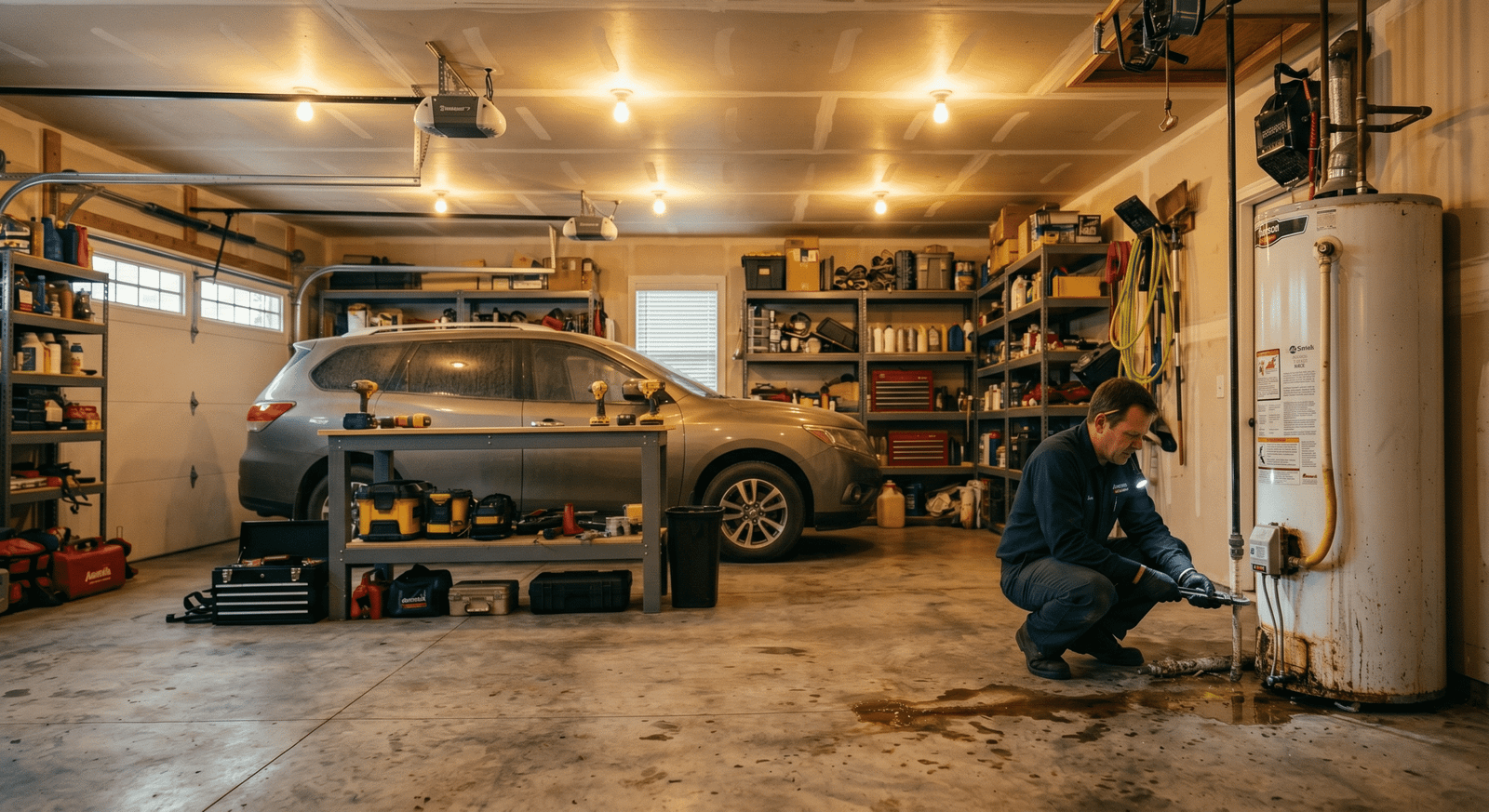
Bulwark plumber locating a sewer line from the surface during a sewer camera inspection
Sewer Camera Inspection & Hydro Jetting, Grapevine & DFW

Sewer Camera Inspection & Hydro Jetting In Grapevine & DFW

See what is actually inside your sewer line before anyone digs, jets or replaces anything. Bulwark Plumbing records a sewer camera inspection of the line, shows you the footage on the spot, marks the problem from the surface, and hydro jets the pipe when jetting is the right tool.

TSBPE 4717324/7 Emergency LineUpfront Flat PricingGrapevine Shop, All DFW
The Short Answer

A sewer camera inspection sends a waterproof camera down your main line to show, on a screen, why it backs up: roots, a belly, a crack, an offset joint, scale or grease. Bulwark Plumbing records the run, shows you the footage on the spot, and locates the problem’s position and depth from the surface.

When the line is coated rather than broken, we hydro jet it clean. We provide sewer camera inspection across Grapevine, Southlake, Colleyville and 52 cities in DFW from our shop at 720 Industrial Blvd in Grapevine.

What Does A Sewer Camera Inspection Show?

A sewer camera inspection shows the inside of the pipe from the cleanout to the city connection: what is blocking it, what shape the pipe is in, and exactly where any defect sits. It turns “the sewer keeps backing up” into a specific cause you can see.

  • Roots. Fine hair roots or a solid mass growing in through a joint. Common in the clay sewer pipe used in DFW houses built before about 1970.
  • Bellies. A sagging section that holds standing water. On a sewer camera inspection it looks like the lens going under water and coming back out. Blackland Prairie clay swells and shrinks, and lines under and around a moving slab sag.
  • Offsets and separated joints. Two sections that no longer line up, leaving a lip that catches waste and an opening that lets roots and soil in.
  • Cracks and breaks. From hairline cracks to sections that have lost part of the pipe wall.
  • Scale and corrosion. Cast iron, standard here until about 1970, rusts and scales from the inside, narrowing the pipe and roughening the wall.
  • Collapsed sections. Where the pipe has failed and soil is in the line. The camera usually cannot pass a collapse, which is itself the answer.
  • Grease. A coating on the pipe wall that narrows a kitchen line or commercial grease line until something catches.
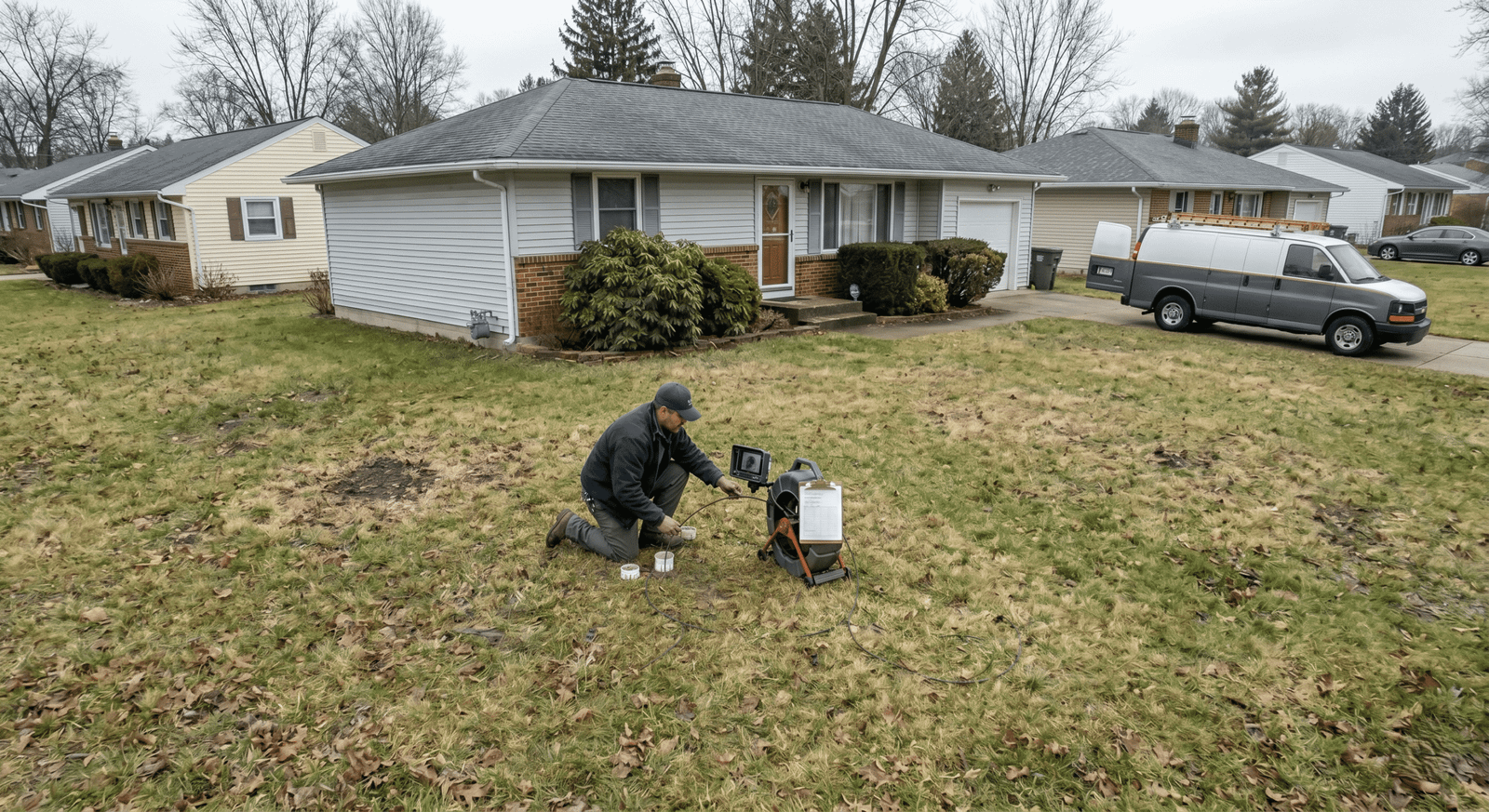
Technician using a locator above the camera head during a sewer camera inspection
Bulwark PlumbingMarking where a defect sits from the yard during a sewer camera inspection

When Do You Need A Sewer Camera Inspection?

You need a sewer camera inspection when the main line backs up more than once, before you buy an older house, after a main line has been cleared, and before hydro jetting an old line. In each case the camera answers a question that would otherwise be answered by guessing or digging.

SituationWhat the sewer camera inspection answers
Recurring backups on the mainWhether it is roots, a belly, an offset or a broken section, and where.
Buying a house built before about 1970Whether the cast iron or clay line is sound before you close.
Right after clearing a main lineWhether the clog was a one time event or the pipe itself is failing.
Before jetting an old lineWhether the pipe is sound enough to take high pressure water.
Sewer smell, soggy yard, or gurgling drainsWhether a break is letting sewage out or soil in.
Before a remodel that adds a bathroomWhether the existing line can take the extra load.

If your main backs up on a schedule, every few months and clearing every time, that pattern alone points to roots or a belly, and a sewer camera inspection confirms which. Our answer on why a sewer keeps backing up covers the causes in more depth.

Bulwark Plumbing technician on a DFW plumbing call
Bulwark Plumbing, Grapevine & DFW
See Inside Your Sewer

Book a sewer camera inspection online and have the window confirmed on the spot. If sewage is backing up right now, call instead.

Call (817) 677-9010

How A Sewer Camera Inspection Is Done

A sewer camera inspection takes a camera on a push cable in through a cleanout, records the whole run, and uses a locator above ground to find exactly where the camera head is. The steps are the same on every call.

  1. Get accessThe camera goes in through the outside cleanout, usually near the foundation or in the yard along the sewer route. With no usable cleanout, we go in through a pulled toilet or a roof vent.
  2. Clear the line if neededA sewer camera inspection cannot see through standing sewage. If the line is backed up, we clear it first by cable, then run the camera through the open line.
  3. Record the runThe camera is pushed the length of the line while it records. The counter on the screen gives the distance from the cleanout to every joint, root mass or defect.
  4. Locate from the surfaceA transmitter in the camera head sends a signal up through the ground. The technician finds it with a handheld locator, marks the spot, and reads the approximate depth.
  5. Show you and recommendYou watch the sewer camera inspection footage with the technician. If the line is sound, you are done. If it is not, you get a written flat price for the fix, and both prices where repair and replacement are both legitimate.

What You Get From A Sewer Camera Inspection

You get to see the footage yourself, on the spot, and you get the location and depth of anything that needs fixing, marked on the ground. That is what makes a repair estimate after a sewer camera inspection checkable rather than something you take on trust.

The recorded location from a sewer camera inspection matters most when the problem is under a driveway or the slab. A broken section at a known distance and depth is a targeted repair. “Somewhere under the yard” is not. If a repair or replacement follows, it carries a written flat price, the permit is pulled where the city requires one, and sewer line replacement carries our three year warranty.

Sewage coming up a floor drain or tub right now? That is not the time to book a sewer camera inspection. Stop using water and call (817) 677-9010. We clear the main first, then do the sewer camera inspection. See 24/7 emergency plumbing.

What Is Hydro Jetting?

Hydro jetting cleans a drain or sewer line with water at high pressure, fed through a hose to a nozzle whose jets spray backward and to the sides. The backward jets pull the hose up the pipe while the spray scours the full inside wall, removing grease, scale, sludge and fine roots instead of just punching a hole through them.

It is the second half of this service because the two work together. A sewer camera inspection tells you whether the line needs jetting and whether it can safely take it. A second sewer camera inspection after jetting shows that the line is clean and lets you see the pipe wall itself, which a coated pipe hides.

When Does Hydro Jetting Beat Cabling?

Hydro jetting beats cabling when the pipe is coated rather than plugged: grease in a kitchen line, scale in cast iron, or a mat of fine roots. A cable punches an opening through that material and leaves the rest on the wall to catch the next load. Jetting removes it.

  • Kitchen and grease lines that close again weeks after cabling.
  • Heavily scaled cast iron that is still structurally sound.
  • Fine root intrusion after the main roots have been cut.
  • Sludge and buildup in long or low-slope runs.

For a single clog of hair, paper or a dropped object, a cable is faster and is the right tool. Our drain cleaning page covers that, and hydro jetting vs. a drain snake compares the two in detail.

When Is Hydro Jetting The Wrong Tool?

Hydro jetting is the wrong tool on a pipe that is already failing: cracked, separated, badly corroded, or partly collapsed. High pressure water can push through a weak wall, wash soil into the line, or widen a break, turning a repair into a bigger one.

That is why an old line gets a sewer camera inspection before it gets jetted. If the camera shows sound pipe with buildup, jetting is safe and effective. If it shows a break, the answer is to repair that section, not to clean around it.

Is Hydro Jetting Safe For Old Cast Iron Pipe?

It is safe for cast iron that still has its full wall thickness, and it is one of the better ways to remove scale from it. It is not safe for cast iron that has rotted through along the bottom, cracked at the hubs, or thinned to the point where the camera shows holes or missing sections.

Most DFW houses built before about 1970 have cast iron drains that are past their expected service life, so the honest answer depends on the specific pipe, and a sewer camera inspection is how you find out which kind you have. If it is sound, we jet it at a pressure suited to the pipe. If it is not, we show you the footage and give you a written price for repair or replacement instead.

Commercial Grease Line Jetting And Sewer Camera Inspection

Restaurants and commercial kitchens are where hydro jetting earns its keep, because grease coats the line every day of service. We jet grease lines for restaurants, retail, offices, churches, small industrial buildings and multifamily properties, scheduled around your operating hours wherever the job allows.

A commercial sewer camera inspection after the first jetting shows how quickly the line is coating, which gives a realistic cleaning interval. We also handle backflow testing and water heater banks, and the same 24/7 line covers an overnight backup.

How Much Does A Sewer Camera Inspection Cost?

A sewer camera inspection is priced on access, the length of the line, and whether the line has to be cleared or jetted first, so we do not publish a figure that would not hold. Here is what you can rely on when you book a sewer camera inspection:

  • The diagnostic fee is quoted on the phone before anyone is sent, and credited in full if you go ahead with the work.
  • Every repair or jetting job gets a written flat price that you approve before work starts, and the invoice matches the quote.
  • After hours, weekend and holiday rates are disclosed on the call.

The technician who runs your sewer camera inspection is a Bulwark employee working under TSBPE license 47173, not a subcontractor, and your call is never sold as a lead. We serve Grapevine, Southlake, Colleyville and the rest of DFW. More homeowner answers are in plumbing answers.

Camera & Jetting Questions

How long does a sewer camera inspection take?

On a typical house with an accessible cleanout, the sewer camera inspection itself is usually under an hour. It takes longer if the line has to be cleared first, if there is no cleanout and access has to come through a toilet or roof vent, or if a problem spot needs to be located and marked from the surface.

Should I get a sewer camera inspection before buying a house?

For a house built before about 1970, or one with large trees near the sewer route, it is worth doing. A standard home inspection usually looks at the fixtures, not the buried line, and a broken or root-filled sewer is an expensive surprise after closing. Ask the seller for cleanout access, book the sewer camera inspection, and keep the footage.

Can a sewer camera inspection find a leak under the slab?

It can show where a drain line under the slab is cracked, separated or broken, and the locator can mark that spot on the floor above it. Supply line leaks under the slab are a different problem; those are found with acoustic and pressure equipment during leak detection.

Do I need a cleanout for a sewer camera inspection?

A cleanout makes it faster and gives the camera the straightest path into the main. Without one, a sewer camera inspection can often go in through a pulled toilet or a roof vent. If your house has no usable cleanout, adding one is a common and worthwhile repair.

Will hydro jetting get rid of tree roots for good?

No. Jetting cuts roots out of the pipe and scours the wall clean, but the roots are still outside the joint they came through and will grow back. Jetting buys time; repairing or replacing the joint is what ends root intrusion, and a sewer camera inspection after jetting shows which joint that is.

Is hydro jetting better than snaking a drain?

It depends on what is in the pipe. A cable is the right tool for a plug of hair, paper or a foreign object. Jetting is better when the pipe wall is coated with grease, scale or fine roots, because it cleans the full diameter instead of punching a hole through the middle. A sewer camera inspection shows which one your line actually needs.

What happens after a sewer camera inspection finds a problem?

You get the footage, the location and depth marked on the ground, and a written flat price for the fix, with both prices where repair and replacement are both legitimate. If the sewer camera inspection shows sound pipe, you are done.

How often should a restaurant grease line be jetted?

It depends on menu, volume and how well the grease interceptor is maintained, so there is no single schedule. A sewer camera inspection after the first jetting shows how fast the line is coating, and that sets a realistic interval. Most kitchens do better on a fixed schedule than waiting for a backup.

Do I get to keep the sewer camera inspection footage?

You see the footage on the screen as it is recorded, standing next to the technician running it. Ask for a copy if you need it for a home purchase, an insurance claim or a second opinion.
Request Service

Request A Sewer Camera Inspection

Tell us what is happening and we come back with an arrival window. For anything actively leaking, call instead: the line is answered around the clock.

Bulwark Plumbing
720 Industrial Blvd Ste 500, Grapevine, TX 76051
(817) 677-9010, open 24 hours

By submitting you agree we may call or text you about this request. Message and data rates may apply. Reply STOP to opt out. See our Privacy Policy and Terms.

Online Booking

Book A Sewer Camera Inspection Online

Pick an arrival window and have it confirmed while you are still on the page. For anything actively flooding, call instead: the line is answered 24 hours a day.