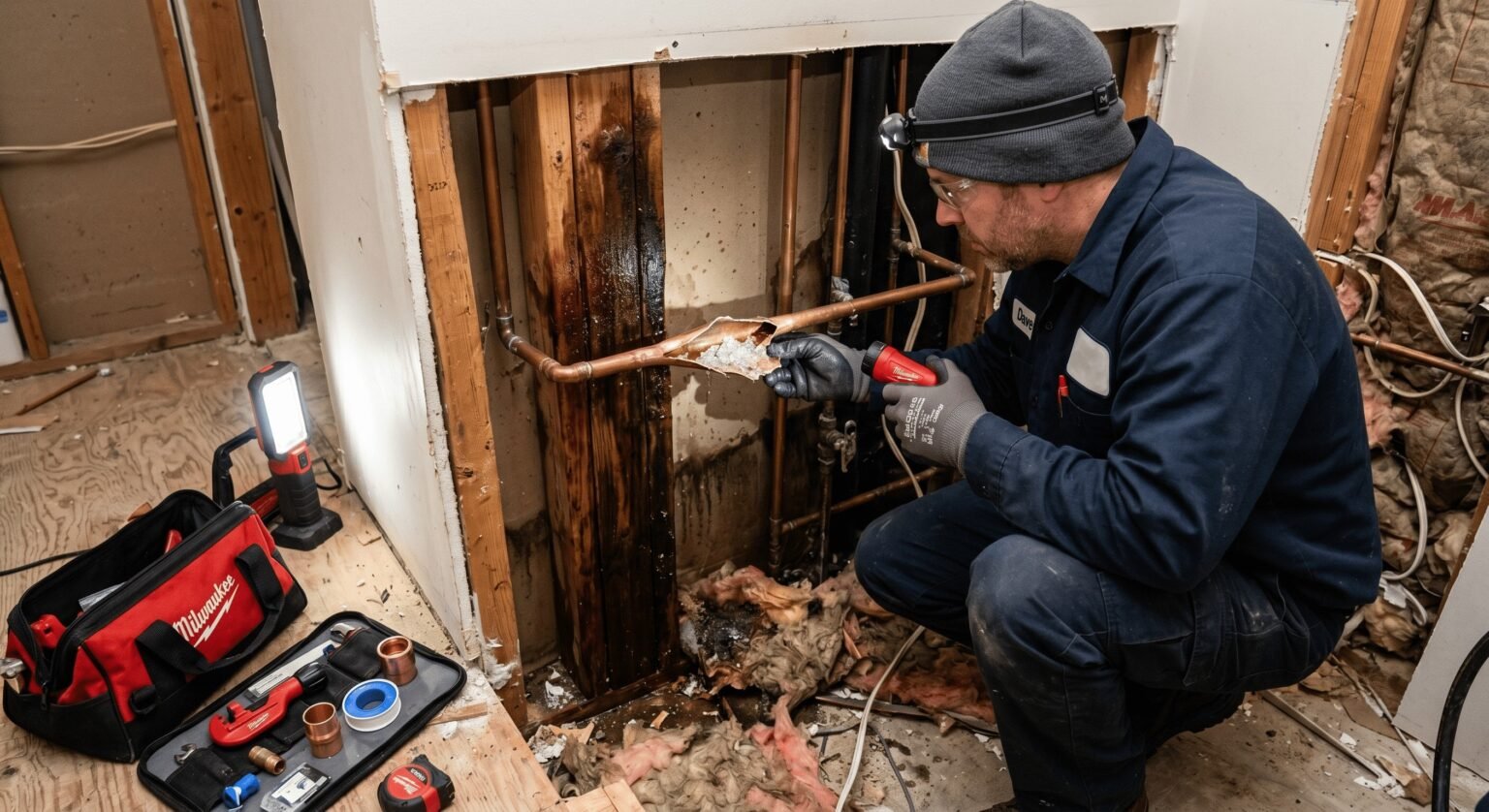
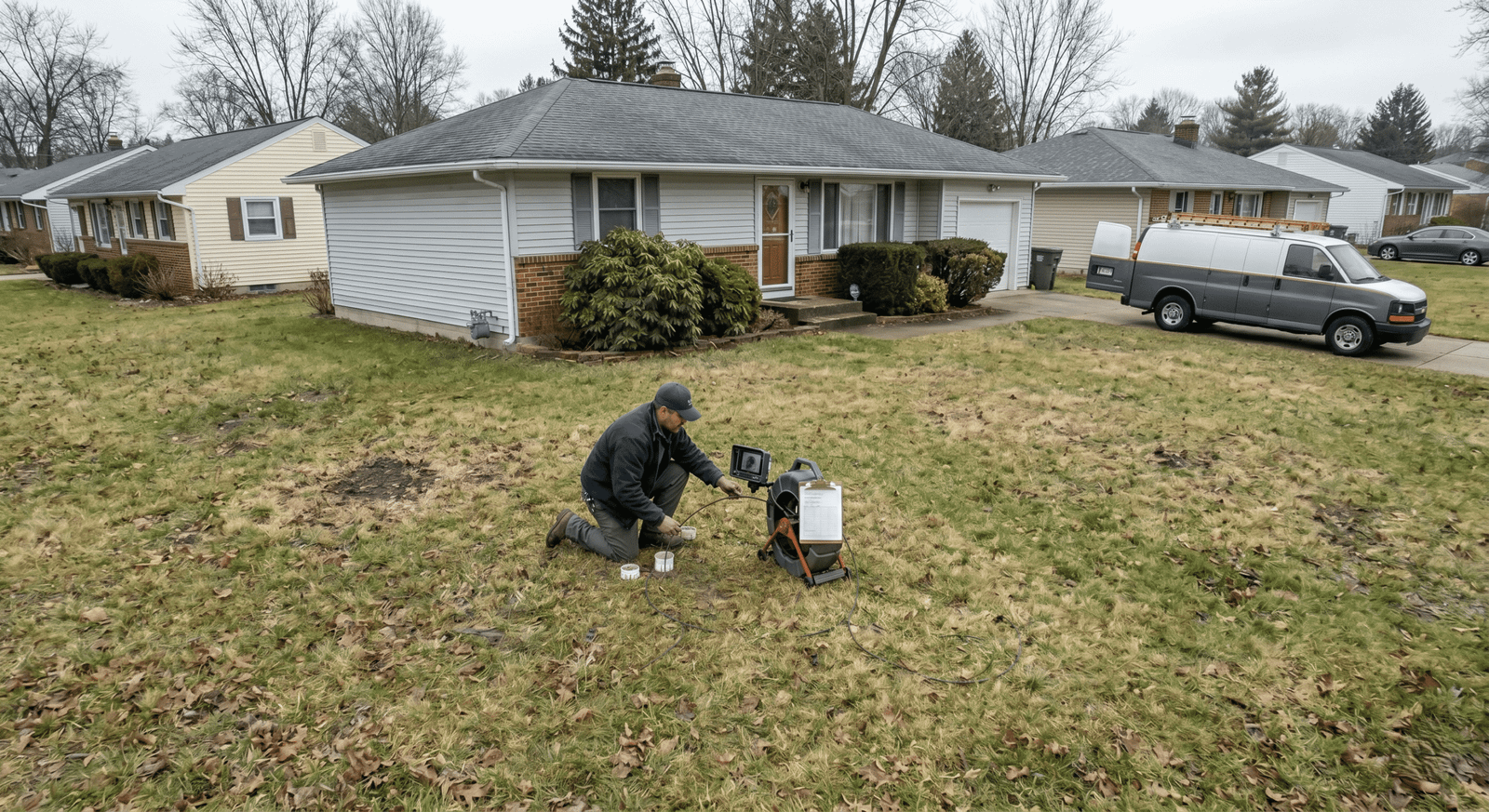
Shut off the main water valve first, stay away from water near outlets or the electrical panel, then drain the lines and call a plumber. Bulwark Plumbing answers (817) 677-9010 24 hours a day across Grapevine and DFW.
When you have a burst pipe, turn off the main water valve, keep clear of standing water near anything electrical, open a low faucet to drain the lines, turn off the water heater, and call a plumber. Then move what you can out of the water and photograph everything for insurance.
Bulwark Plumbing repairs burst pipe calls 24 hours a day from our shop in Grapevine, covering Southlake, Colleyville and 52 cities across DFW. Call (817) 677-9010 now if water is running.
With a burst pipe, the order is simple: stop the water, make the area safe, then limit the damage. Everything else can wait ten minutes. Work through these steps calmly and in this order.

Most DFW homes have two places to stop the water: the city valve at the meter box, usually near the street or sidewalk, and a house-side shutoff that is often in the garage, beside the water heater, or on an outside wall where the line comes into the house. Not every house has the second one, and builders put it in different places, so look before you need it. Knowing where it is turns a burst pipe from a flood into a puddle.
Here is where to look before you ever have a burst pipe:
For a burst pipe, shut off the main water valve, stay clear of wet electrical, then call. The line is answered 24 hours a day and the dispatcher gives you a real arrival window.
A frozen pipe becomes a burst pipe because water expands as it freezes, which builds pressure in the pipe until it splits, often somewhere other than the frozen section. The split usually does not leak until the ice thaws, which is why many homes in the February 2021 freeze found a burst pipe only when temperatures came back up.
North Texas houses are built for heat, not cold. Pipes run through attics, garages and exterior walls that were never meant to see days below freezing, so a hard freeze here does more damage than the same temperature would in a northern state. To prevent a burst pipe before a freeze:
If a faucet slows to a trickle or stops during a freeze, a pipe is likely frozen. Leave that faucet open, shut the main if you suspect a burst pipe, and warm the pipe gently: a hair dryer on low kept moving, warm towels, or raising the room temperature. Check the rest of the house, because a freeze rarely splits just one pipe.
A plumber confirms the water is off, finds the exact break, opens only as much wall or ceiling as the repair needs, replaces the damaged section, and pressure tests the line before turning the water back on. On a Bulwark call, you get a written flat price before any of that work starts.
In more detail, a Bulwark burst pipe visit runs like this:
If the house has had more than one burst pipe, or the pipe is pinholing from age, we will say so and price a repipe as a separate option. Repipes carry a three-year labor warranty, and the one-year labor baseline covers other repairs. If water is coming from under the slab instead of a wall, read signs of a slab leak, and if the leak is at the tank, a leaking water heater: repair or replace.
If water has soaked into drywall, insulation, carpet pad, cabinets or under flooring, yes, you likely need professional drying in addition to the plumbing repair. A plumber stops the leak and repairs the burst pipe; drying out the structure is a separate trade.
Wet building materials that stay wet for more than a day or two are at real risk of mold, and water under flooring or inside walls can stay wet for a long time while the surface looks dry. A water damage mitigation company uses moisture meters, fans and dehumidifiers to dry the structure and documents moisture readings, which insurers often want to see. Call your insurance company early after a burst pipe, since many policies have notice requirements and some insurers have their own process for drying vendors. You choose who does the work.
For a small burst pipe caught quickly, such as a supply line under a sink that wet the cabinet floor, towels, fans and an open cabinet door may be all it needs. If you are not sure, ask us on the call and we will tell you what we see.
Do not leave the water on while you look for the break, and do not walk into standing water near anything electrical. Most of the extra damage after a burst pipe comes from those two.
Bulwark Plumbing handles burst pipe repairs around the clock from our shop at 720 Industrial Blvd in Grapevine. The technician who comes out is a Bulwark employee working under Texas license 47173, never a subcontractor, and your call is never sold to another company. We cover Grapevine, Southlake, Colleyville and 52 cities across DFW. See 24/7 emergency plumbing for how dispatch works, or browse more plumbing answers.
If a burst pipe is running water right now, shut the main and call (817) 677-9010. If the water is off and it can wait for a scheduled slot, book online in about a minute and the window is confirmed on the spot.
In a burst pipe emergency, most homeowners do, and stopping the water is the priority. The valve at the meter box often needs a meter key or an adjustable wrench and can be stiff, so turn it slowly and do not force it hard enough to break it. Some cities prefer residents use their house-side shutoff when one exists, so use that first if you have it.
Many policies cover sudden and accidental water damage from a burst pipe, while damage from a slow leak or lack of maintenance is often excluded. Coverage varies by policy, so call your insurer and read your own policy. Photos, video and the failed piece of pipe all help the claim.
Damage starts immediately, since a burst pipe on a supply line can release a large volume of water in minutes. Wet drywall, insulation and flooring that stay wet for more than a day or two are at real risk of mold. That is why shutting the water off and starting to dry things out matters more than anything else.
Pipes also fail from corrosion, old fittings, high water pressure, and in North Texas, from slab and foundation movement in expansive clay soil. A pinhole in copper can grow into a split, and a failed supply line under a sink or toilet can let go without warning. A plumber can check your water pressure and the condition of the rest of the piping while on site.
After a repair, water is turned back on slowly so air can escape and the plumber can check the repair under pressure. Run each faucet briefly to clear air and any loosened debris. If you see water anywhere new, shut the main again and call.
They can if the same pipe is exposed the same way. Insulating pipe in attics, garages and exterior walls, covering outdoor faucets, and dripping faucets during a hard freeze all lower the risk. If the burst pipe was in a spot that cannot be protected, rerouting it is worth asking about.
Once the water is off, a burst pipe stops flooding, but you are without water until the repair is made and the wet materials still need attention. Call either way. A plumber can tell you on the phone whether it needs a truck tonight or a morning appointment.
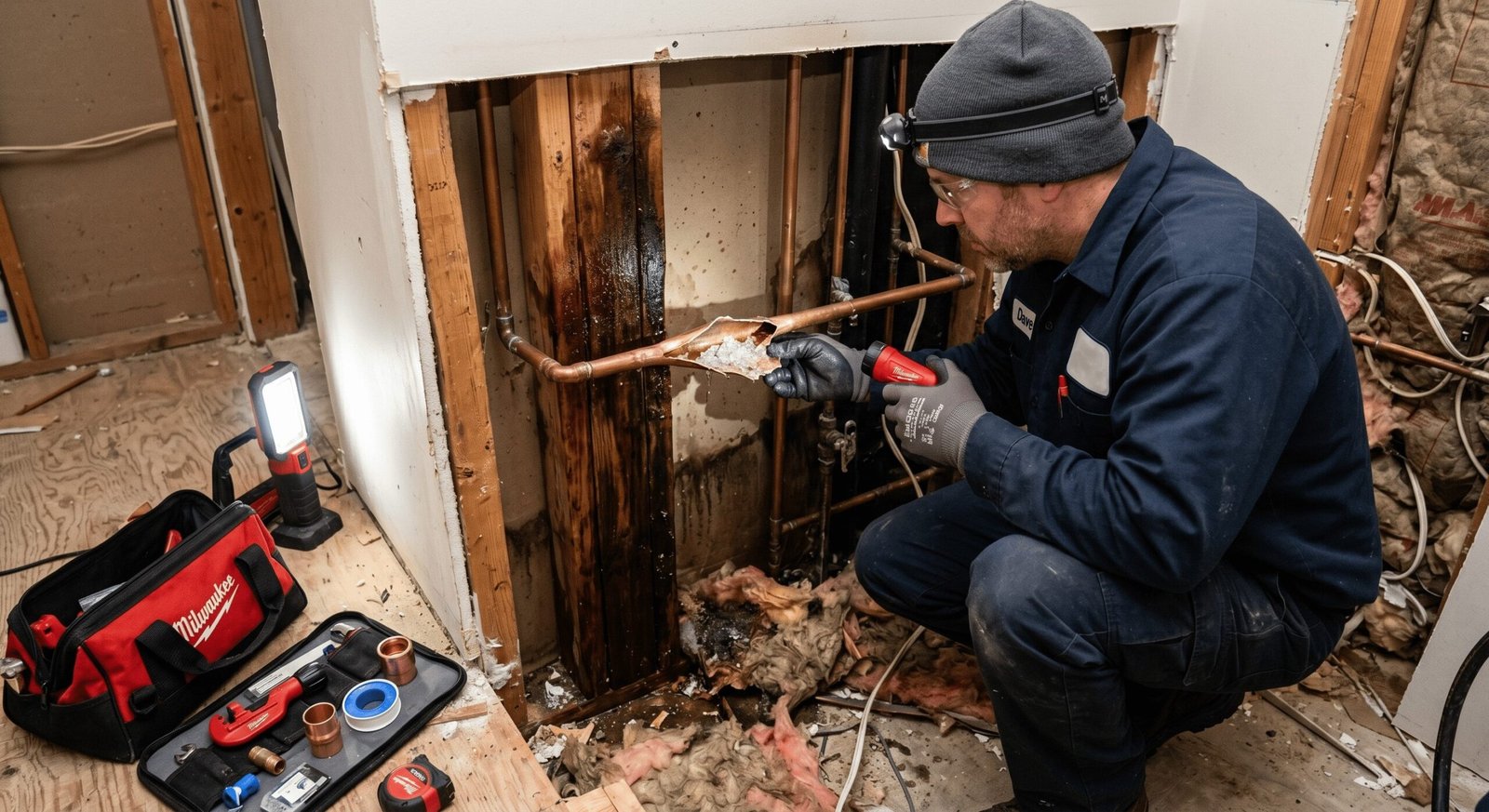
If a burst pipe is still running, shut off the main and call instead: the line is answered around the clock. For a burst pipe that is already shut off, tell us what happened and we come back with an arrival window.
If the main is shut on a burst pipe and it can wait, pick an arrival window and have it confirmed on the spot. If water is still running, call instead: the line is answered 24 hours a day.