Turn off every fixture in the house and watch the water meter. If it still moves, water is escaping somewhere, and a warm floor, a jump in the bill or the sound of running water point to a pipe under the slab.
The clearest signs of a slab leak are a water bill that jumps without a reason, a warm or damp spot on the floor, the sound of running water when nothing is on, and a water meter that keeps moving with every fixture off. A meter test confirms a leak; a plumber with acoustic and pressure equipment pinpoints where it is.
Bulwark Plumbing locates and repairs slab leaks from our shop in Grapevine across Southlake, Colleyville and the rest of DFW, 24 hours a day.
A slab leak shows up as water you cannot account for: a higher bill, a meter that moves when nothing is running, a warm or damp patch of floor, or the sound of water with every tap off. Any one of those is worth a meter test. Two or more together make a slab leak likely.
New cracks in walls or flooring can come from slab movement as well as from water, so on their own they are not proof of a leak. They are a reason to run the meter test.
That combination most likely means a slab leak on a hot water line. Hot water escaping into the concrete warms the floor above it, and because the water heater has to refill and reheat what is lost, both the water bill and the energy bill usually rise.
Confirm it in two steps. First do the meter test below to prove water is leaving the system. Then close the cold water supply valve at the top of the water heater and watch the meter again. If the meter stops, the leak is on the hot side, which is consistent with the warm spot. If you leave that valve closed, turn the heater off as well: gas control to OFF or PILOT, or the breaker off on an electric unit.
A warm spot is a strong clue, not a location. Water travels under a slab, so the warmest tile may sit a few feet from the actual slab leak. That is why the next step is leak detection, not breaking up the floor where it feels warmest.
Run the meter test, then call. If water is coming through the floor, shut off the main first. Otherwise, book a window online and have it confirmed on the spot.
Shut off every water use in and around the house, read the meter, wait without using any water, and read it again. If the reading changed, water is leaving the system somewhere.
A warm floor, a water heater that runs constantly, and a meter that stops when the heater’s cold supply is closed all point to the hot side. A cold line leak shows up as a moving meter and damp flooring or pooling with no warmth.
The difference matters for what you can do while you wait. With a hot side slab leak, many homeowners can keep cold water running by keeping the water heater’s supply closed between uses. A cold side leak usually means closing the main between uses. Neither is a long term arrangement.
Because most DFW homes are built on concrete slabs over Blackland Prairie clay, which swells when wet and shrinks when dry. As the soil moves, the slab moves, and the copper water lines running through and under it flex and rub against concrete and gravel season after season.
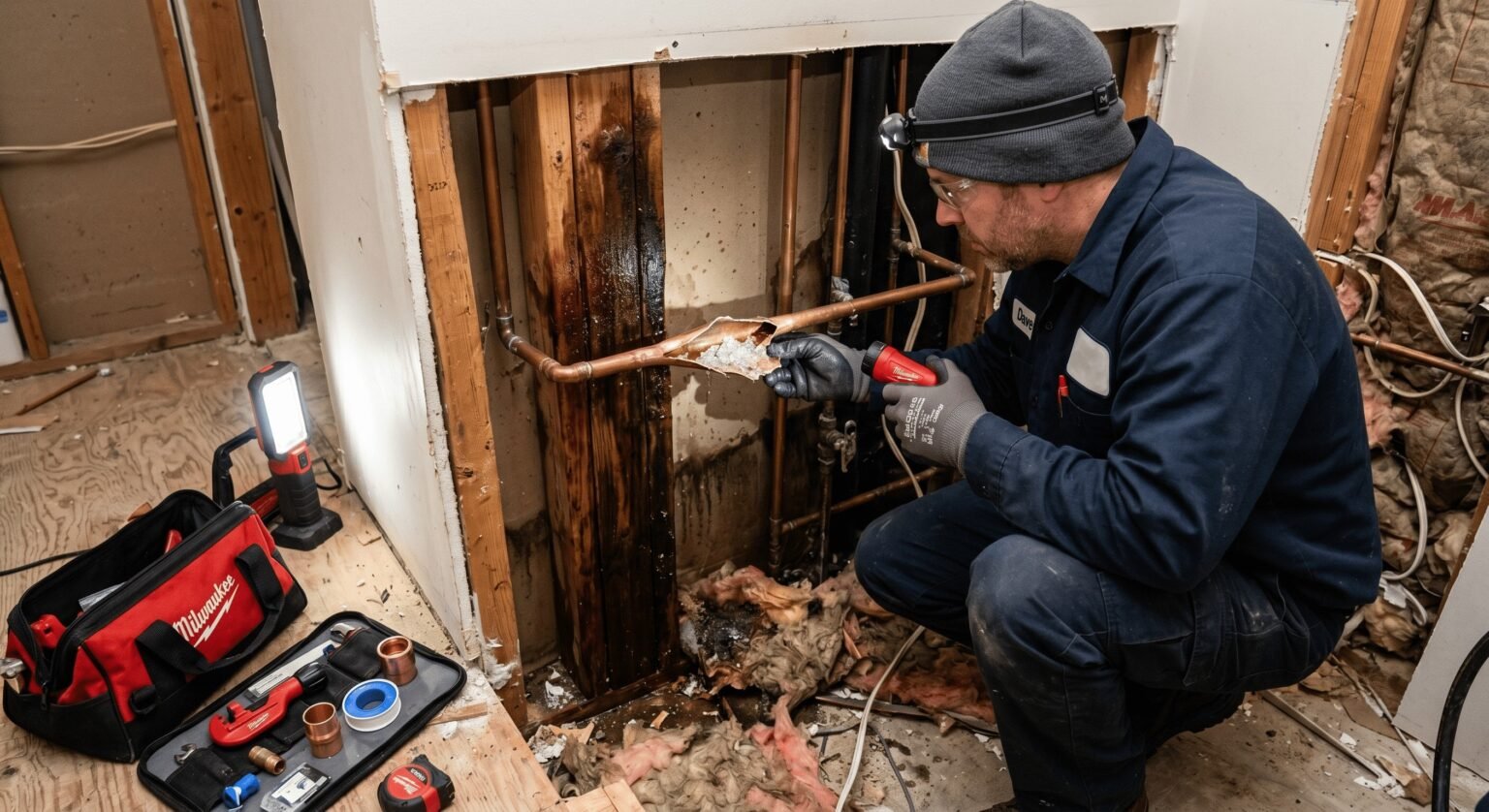
Copper in the slab work-hardens with that movement and wears pinholes, especially where it touches the concrete or another pipe. Hard water adds scale inside the lines. The February 2021 freeze also split pipe across the region. Put those together and a slab leak is one of the most common calls in North Texas.

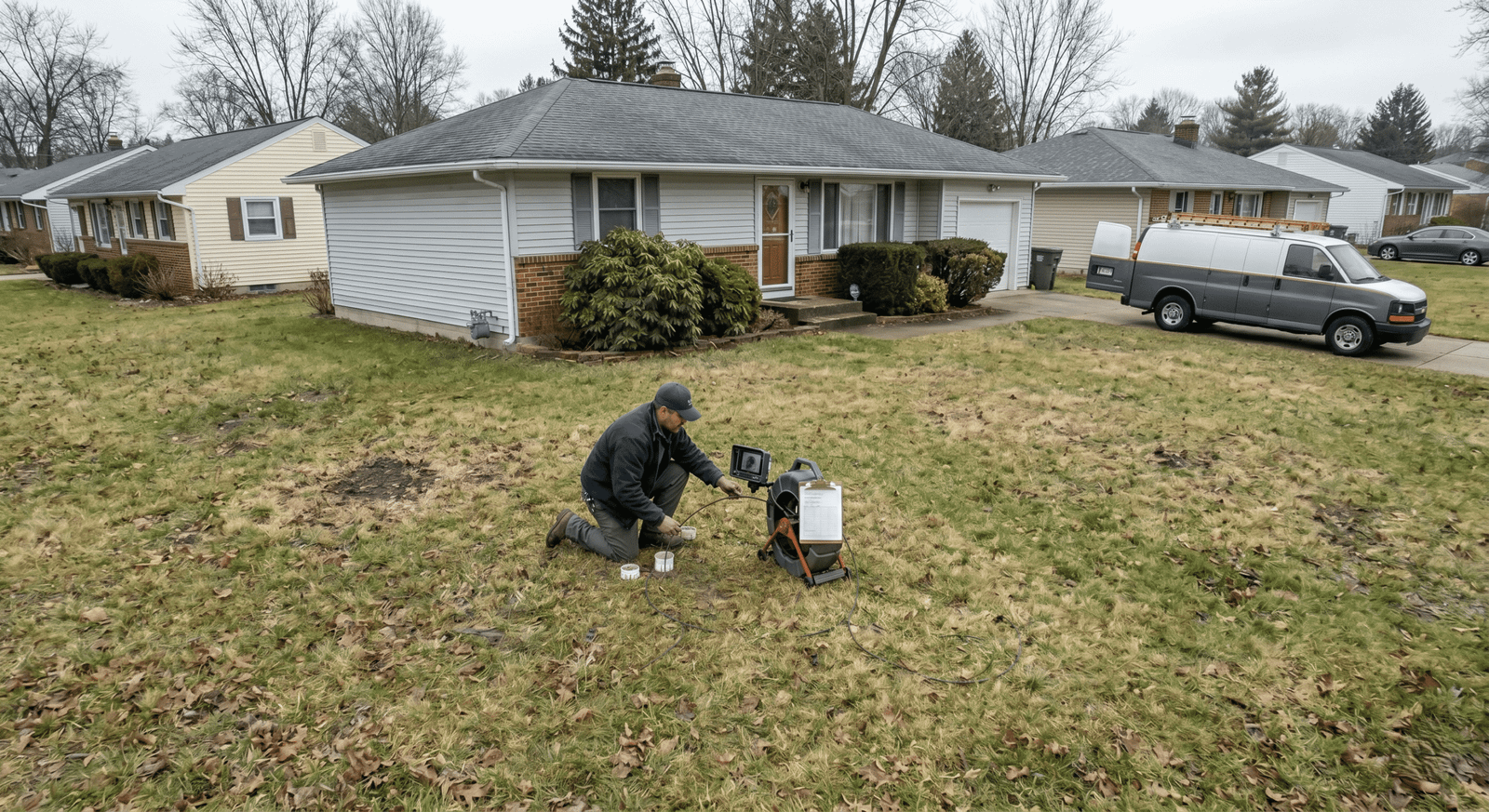
With acoustic listening equipment and pressure testing, not a sledgehammer. Pressure testing isolates which line is leaking, and acoustic equipment listens through the concrete for the sound of water escaping, which narrows the location to a marked spot on the floor.
Bulwark Plumbing uses acoustic and pressure equipment on every slab leak call and records the location before recommending a repair. More detail is on our leak detection page.
There are three ways to repair a slab leak: open the floor at the leak and fix that spot, reroute the line around the slab, or repipe the house. Which one fits depends on the age and condition of the piping, how many leaks there have been, and what is above the leak.
| Option | What it involves | Often fits when |
|---|---|---|
| Spot repair | Cut through the floor at the marked spot, repair the pipe, restore the concrete | A first leak in otherwise sound pipe, with accessible flooring above it |
| Reroute | Abandon the leaking run under the slab and run new pipe through walls or the attic | The leak is under cabinets or costly flooring, or the run has leaked before |
| Repipe | Replace the home’s supply piping, in copper, PEX or CPVC | Repeated leaks in aging pipe, and more expected |
Where more than one option is legitimate, you get each price in writing. Repipes are permitted where the city requires it and carry a three year Bulwark warranty. If your house has had slab leak after slab leak, it is worth comparing the cost of the next spot repair with a reroute or repipe.
Run the meter test, then call a plumber to locate it. If water is coming up through the floor, shut off the main water valve first and keep everyone clear of any outlets or cords near the water.
Sometimes, and usually only part of it. Many homeowners policies treat the cost of getting to the pipe and repairing the resulting water damage differently from the cost of the pipe repair itself, and gradual leaks are often treated differently from sudden ones.
Policies vary a great deal, so read your own or call your agent before work starts. A recorded slab leak location and a written description of the repair are the documents an adjuster usually asks for, and you will have both from us.
Bulwark Plumbing performs acoustic and pressure leak detection throughout Grapevine, Southlake, Colleyville and the surrounding DFW area. The technician who comes out is our own employee, licensed under TSBPE 47173. The diagnostic fee is quoted on the phone before anyone is sent and credited in full if you go ahead, and you approve a written flat price for the repair before any work starts.
If you suspect a slab leak because the floor is warm or the meter will not stop, call (817) 677-9010, or book a window online in about a minute. Our 24/7 emergency line is there if water is coming up through the floor. More homeowner questions are on our plumbing answers page, including what to do if your water heater is leaking.
No. Pressurized water keeps escaping through the hole, and the flow usually erodes the opening and the soil around it over time. A slab leak that seems to stop has usually just moved where the water shows up.
It becomes one when water is surfacing through the floor, when the floor is hot enough to be a burn risk, or when water is near electrical outlets or equipment. A slow leak found by a meter test is urgent but can usually be scheduled. Either way, do not leave it for months, because the water is going somewhere.
Usually, yes. Many people shut off the water at the main between uses until the repair, or close the cold supply to the water heater if the slab leak is on the hot side. A plumber can tell you on the phone what is reasonable for your situation.
Water under a slab can soften or wash away the soil supporting it, and in expansive clay it can make the soil swell unevenly. That is one reason not to let a known slab leak run. Whether a particular leak has affected the foundation is a question for a foundation professional, not a plumber.
When one section of copper under the slab has worn through, the rest of that piping has usually seen the same water, the same soil movement and the same years. That is why, after a second or third slab leak, rerouting or repiping is often worth pricing alongside another spot repair.
Some DFW water utilities have a leak adjustment policy for hidden leaks such as a slab leak once it has been repaired, often requiring proof of the repair. The rules differ by city, so ask your utility and keep the plumber's invoice.
Not to find it. Acoustic listening and pressure testing locate a slab leak from above the floor. The floor is opened only for a direct repair, and then only at the marked spot. A reroute can avoid opening the floor altogether.
Tell us what is happening and we come back with an arrival window. For anything actively leaking, call instead: the line is answered around the clock.
Pick an arrival window and have it confirmed while you are still on the page. For anything actively flooding, call instead: the line is answered 24 hours a day.